Inquisition Jailer
As heroes confront the forces of the Shan’nur Inquisition at their headquarters, they face the most hardened veterans of the order.
Sword of Light Jailers -Level 14 Brute – XP 1,000
Medium natural humanoid
Initiative +12 Senses Perception +7
HP 162; Bloodied 81
AC 26; Fortitude 26, Reflex 26, Will 25
Speed 6
Thump and Lash (standard; at-will) • Weapon
+17 vs. AC; 3d6 + 6 damage, and the target takes a -2 penalty to melee attack rolls until the end of its next turn.
Jailer’s Tangle (standard; requires a scourge; recharge 5-6) – Weapon
+17 vs. AC; 3d6 + 6 damage, and the target is immobilized and takes a -2 penalty to melee attack rolls until the end of its next turn.
Alignment Evil Languages Common
Skills Insight +13, Intimidate +16
Str 23 (+13) Dex 20 (+12) Wis 10 (+7)
Con 12 (+8) Int 10 (+7) Cha 18 (+11)
Equipment ring mail, mace, scourge (whip)
Posted in Uncategorized and tagged creature: paragon brute, subplot: the Shan'n'nur by Adam A. Thompson with no comments yet.
Transmute Wood to Bone
Transmute Wood to Bone
Transmutation [Healing]
Level: Drd 4, Sor/Wiz 5, Clr 5
Components: V, S, M/DF
Casting Time: 1 standard action
Range: Medium (100 ft. + 10 ft./level)
Area: Up to two 10-ft. cubes/level (S)
Duration: Permanent; see text
Saving Throw: See text
Spell Resistance: Yes
This spell turns natural, uncut or unworked wood into an equally-sized bone, complete with marrow. Magically-enhanced wood is not affected by the spell.
If cast on living wood, for instance a tree, the wood must make a saving throw with a DC equal to the caster’s level + attribute bonus. Wooden structures must also make such a save. If cast on wands, staves, and other wood in possession of a living creature, the living creature rolls for the item.
The bone remains until a successful dispel magic or transmute bone to wood (reverse of this) spell restores its original subtance but not necessarily its form, especially if the bone has been chipped, fractured, or otherwise broken.
This spell can also be used to turn forests into components or raw material for necromantic magic, as the bones can be animated and turned into giant skeletons.
Arcane Material Component
A rib from a human or demihuman and a piece of bark off of a live tree.
Posted in Spell and tagged cleric spell level 5, druid spell level 5, sorcerer / wizard spell level 5, transmutation by Stephen Hilderbrand with no comments yet.
The Ruins of Soguer – The Western Ruins
Presented below is the overview of the Ruins of Soguer, a map of the ruins, and descriptions of the western gates and the palace – the two locations where players are likely to enter the city. Following posts will describe the remaining sections of the city.
Previous sections of the adventure can be found here:
The Ruins of Soguer – Introduction
The Ruins of Soguer – Start of the Adventure in Aguies Town & Castle
The Ruins of Soguer – River Journey to the Ruins
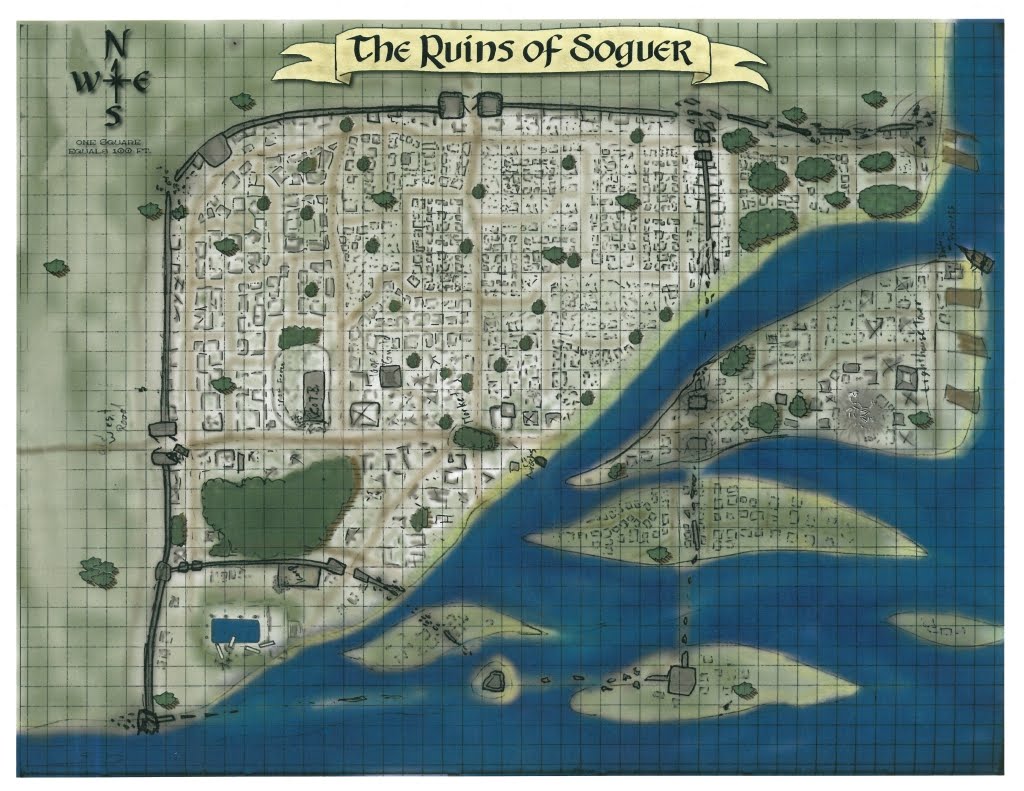 Running the Adventure: This section of the adventure details locations in the ruins of the city of Soguer. As the players explore these locations they will learn the events surrounding the fall of Soguer forty years prior. Notable locations they may explore are the mage’s guild tower, where they can meet and help the former guildmaster of the mage’s guild, a sea-side ruin where the Auroch priestess-princess Ijer’svern is held, and the skeletal remains of the old king’s dragon, which is itself a portal to the Shadowfell where the players may find the old king’s sword.
There are also several locations that are not central to the main plot, such as the old palace, the elven and dwarven districts, the cathedral, the lighthouse, the market square, and various gatehouses. These locations contain lurking monsters and hidden hazards, treasure, and interesting locations to explore that add to the city’s atmosphere. Finally, there are dangers that threaten those who stay in the Ruins of Soguer. Restless spirits and wandering monsters will haunt visitor’s dreams and stalk them when they rest, as detailed below.
Hazard – Dreams of Things That Should Not Be – The ruins are a haunted place. By night, horrible nightmares of inhuman things coming out of the sea beset those who sleep here. Sleeping results in an attack at +13 vs the Will defense of the sleeper. A hit prevents the recovery of 1d6 healing surges. Those who do not sleep see faint ghosts of townsfolk pawing at the sleepers. If the ghosts are confronted, likely waking the sleeper, they dissipate, returning when the sleeper is once again left unguarded.
Random Encounters – Taking an extended rest in or around the ruins brings a 25% chance of a random encounter. Feel free to roll randomly or pick an encounter from this list.
- level 7 – Dwarven scavengers. An expedition of 5 dwarven bolters and 4 dwarven hammerers, traveling stealthily (+9 stealth), searching the ruins for valuables and trying to avoid the Hezrou. They will be wary of or hostile towards anyone they encounter.
- level 8 – The Saurian Hunters detailed below are encountered searching the ruins for valuables. They will be unfriendly when encountered.
- level 9 – A pack of worgs or spectral panthers finds and attacks the players.
- level 10 -A bog hag from the swamps and her pets, a venom-eye basilisk, 2 shambling mounds, and 2 trolls are hunting in the ruins and gleefully attack the players.
- level 11 -A group of 2-3 Spirit Devourers (MM p. 68) attack the party.
- level 12 -The Fen Hydra from the palace is out hunting, and finds the players.
- level 13 – The Hezrou that stalks these ruins finds the players and attacks them.
Location Descriptions The player characters are likely to enter the city through the west gates – start this portion of the adventure there. The locations described are presented from west to east, which is the most likely order the party will come upon them as they explore the city.
1 – West Gates – The walls are falling in places, but the towers and tall gates still stand here. There are some gems and precious inlays still intact near the tops of the enormous doors. As they approach read or paraphrase the following:
Each open door of these enormous gates stands fifty feet across and one hundred feet tall. The gates are made of rusted iron, decorated with the remains of an enormous inlay depicting royal lords at the head of an army, standing before a walled city, with many ships in full sail on the sea nearby. In the sky above the city are reliefs of two flying dragons – one on each door.
Skill Challenge, Level 11, XP 600, to get the precious inlays. The skill checks must be done in the following order to succeed. In this skill challenge, the players only fail and cannot proceed if they fail the Perception check to begin the challenge. Once they spot the inlays they are free to continue to try to retrieve them, and risk falling, for as long as they like. Only award the XP for this skill challenge if they retrieve the inlays from the gates.
- DC 16 Perception check to spot the precious inlays remaining in the dragons at the top of the gates, or DC 21 History check to recall tales of the fabulous jeweled gates of Soguer. Failure at this stage ends the skill challenge.
- Two DC 16 Athletics checks to climb up the 80 ft. to reach them. Failure on the first check results in a fall for 3d10 damage, failure on the second results in a fall for 6d10 damage.
- DC 16 Acrobatics check to balance on footholds on the wall as they work on freeing the inlays. Failure at this stage results in 8d10 falling damage.
- DC 16 Thievery to get the inlays loose. Failure at this stage results in a fall for 8d10 damage.
Treasure, Level 11, Parcel #10: 1,000 gold worth of ebony, ivory, and semi-precious stones, weighing 50 pounds in total.
2 – Palace – A hydra lives in the hilltop pool that was once the palace. Submerged passages connect the palace and a nearby empty keep and lead to the royal armory. As they enter this area read or paraphrase the following:
The river borders a large walled area here. Near the river a wide, low hill stands, surmounted by several large columns surrounding a large square pool of water. Ruined remains of small buildings lie near a gate in the northwest corner of the walls, and the burned remains of a large stone keep stand by another gate to the east.
Encounter – Level 12, XP 3500 – a fen hydra lives in the pool on the hill, a structure that was once a lowered ballroom in the palace. Anyone approaching the pool will attract the hydra’s attention, and it will attack them, fighting to the death.
Trap – The 5′ of ground at the edge of the pool is slippery and unstable, which a character can notice with a DC 23 Nature or Dungeoneering check, or a DC 28 Perception check. The edge of the pool gives way under a character’s feet: upon entering one of the squares at the edge of the pool the trap attacks at a +14 vs. Reflex; on a hit the target falls into the water of the pool and must begin swimming or sink beneath the surface.
Trap – The palace grounds are peppered with sinkholes which will open up in this area and plunge characters into the pool or submerged halls under the palace. A character can notice these sinkholes with a DC 23 Nature or Dungeoneering check, or a DC 28 Perception check. The sinkholes give way under a character’s feet: upon entering one of the squares that is a sinkhole the trap attacks at a +14 vs. Reflex; on a hit the target plunges into a submerged passage below, and must swim 100 feet to escape to the hydra’s pool.
2 a – Palace Pool – Characters entering the pool of water on the hill that was once the palace will see the following:
This deep, murky pool is wider below than the stonework that borders the surface. The cold water descends to a flat, muddy floor thirty feet below. Pillars support the overhang and a balcony that runs around the circumference of this submerged hall, and passages lead off in all directions.
If characters swim down and explore the side passages, they will eventually find that all are caved in after a short distance except for one passage. This passage leads north for fifty feet and then turns east and continues for three hundred feet. The last section is lined with the remains of rusted suits of armor standing in display before ending at a bent and open iron door. This door leads to area 2c, the treasury. With DC 10 Athletics checks to swim explorers should be able to swim to the door and back with 4 rounds to spare before having to make Endurance checks to drown on the return trip (DMG p159).
2 b – Palace Keep – Approaching the keep reveals the following details to the PC’s:
The burned out remains of a keep stand against the wall separating the palace area from the rest of the town. The keystone of the arch above the door-less entrance is inscribed with the words “The Lord’s Word is Law.” Within, the keep is empty except for a large mound of rubble where the southwest tower has fallen and a staircase in the northwest corner leading down into a water-filled passage.
If the players descend into the passage with some type of waterproof light source they see the following:
The staircase descends into a water-filled passage. Three muck-filled store rooms open on the south wall of the corridor, which continues four hundred feet to an iron door.
This door is barred from the other side, is a DC 27 Strength check to break down, and leads to area 2c, the treasury. With DC 10 Athletics check to swim explorers should be able to swim to the door and back with 3 rounds to spare before having to make Endurance checks to drown on the return trip (DMG p159).
2 c – Treasury and Armory – If the players reach the submerged treasury, read or paraphrase the following:
This plain room’s ceiling is supported by pillars. The rotted remains of two empty chests are in this otherwise empty room. An iron door with a keyhole stands closed to the south, and another door, barred from this side, leads east.
Searching the muck on the floor and succeeding at a DC 16 Perception check will reveal 5 gold left behind by those who looted this chamber. A DC 16 Thievery check to pick the lock or a DC 27 Strength check to break down the iron door allows access to the Palace Armory. Here, weapon racks and armor stands hold once-fine examples of every type of armor and weapon, now ruined by the murky water that fills this chamber.
Treasure – Level 11 Treasure parcels 4 & 9 – Examining this gear and succeeding on A DC 10 Perception check reveals that two pieces of equipment have weathered the water without damage: an ornate quiver with 4 level 13 magic arrows in it and a level 12 suit of armor.
Posted in Uncategorized and tagged The Ruins of Soguer by Adam A. Thompson with no comments yet.
Brevity vs. Bloat
I just read Wolfgang’s editorial “Keep it Short” in the latest issue of Kobold Quarterly. In it he extols the virtues of short books with lots of impact. I don’t disagree with him – short and clear is good – but his article rails against long works as though they are bad in and of themselves. Maybe he’s used to seeing writers pad their word count excessively because they’re payed by the word.
In any case, his editorial got me to thinking about the subject of word count, brevity, and bloat and about how I approach writing RPG supplements, specifically in regards to what I see as one of the biggest pitfalls in RPG writing – skimming over material the DM needs to run the adventure.
When I write an adventure I have several goals in mind. Of course, I want it to be fun, fantastic, compelling, believable and exciting. That almost goes without saying. Beyond that one of my number one goal is to make my adventures easy for DMs to run. I want my adventures to leave a casual or first-time DM and their players saying “that was great!” instead of wondering how to start.
In my many years as a player I’ve read lots of adventures. Some do a great job of laying out the adventure for the DM, other less so. The bad ones are the adventures that have weak introductions or transitions, and require the DM to ad-lib or completely make up sections of the adventure to keep the story moving along. Many DMs are up for this task, but for many DMs, especially new DMs with less experience, being left hanging by the adventure you’re trying to run can really demoralize you. I feel like this just adds to the steep learning curve that new DMs face, and I want Unicorn Rampant to produce adventures that ease this learning curve, increase the fun everyone is having, and help the hobby grow.
To that effect, when I write an adventure, my goal is to provide the DM with everything he needs to present the story from start to finish. Many DMs may not use all of this material, especially the hook or introduction material. But for a first time DM, I want to make sure they have something that they can use to get the action started without having to rely on telling the players that they’re all gathered at the inn and see a wanted poster. Remember, not all of us are in the midst of playing epic campaigns. Many players, especially those new to the hobby, can really use a way to get the story rolling easily.
Now, including summaries of the course of the adventure and read-aloud text for every transition and important location in the adventure can add to the word count, but all of it is included for a purpose. Organizing it cleanly and keeping the summaries brief and clear is all part of making the adventure easy to run. If that adds to the word count, so be it. I would rather provide DMs and players with more than they need then not enough.
-Adam A. Thompson
Posted in Uncategorized and tagged about Unicorn Rampant games, ale break by Adam A. Thompson with 1 comment.
Lord Dunsany’s The Sword of Welleran and Other Stories
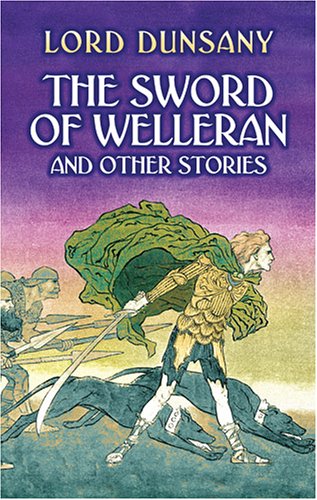 The Sword of Welleran and Other Stories is the influential third book by Irish fantasy writer Lord Dunsany, aka. Edward J. M. D. Plunkett. Dunsany’s stories have been major influences on the work of J. R. R. Tolkien, H. P. Lovecraft, Ursula LeGuin and many others writing fantasy today. This collection of stories was first published in hardcover by George Allen & Sons in October, 1908, and has been reprinted a number of times since.
Some of the short stories in this collection are linked by Dunsany’s invented pantheon of deities who dwell in Pegāna, which were the focus of his earlier collections The Gods of Pegāna and Time and the Gods. One of the stories, “The Fortress Unvanquishable, Save for Sacnoth,” was afterwards (1910) published by itself as a separate book, a now very-rare “Art-and-Craft” style limited edition. A scene from “The Highwaymen” is very similar to a scene I’d written a few weeks back in one of my Proppian adventures.
To me Dunsany is a true master of the fantastic form. His collection, The Hashish Man has been a major influence on my writing and my own thinking about creating interesting characters in role playing games since I first read it back in 2000. This heightened imagination continues to inspire me to this day.
This collection is well worth finding at a used book store for $2 (thanks, Half Price Books!), but also available for free online at Project Gutenberg. Check it out for inspiration in your fantasy role playing games.
Posted in Uncategorized and tagged fiction, inspiration by Stephen Hilderbrand with no comments yet.
Memory Eater
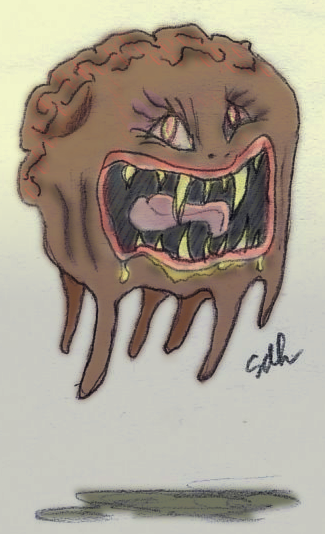 This floating, mostly-mandible creature eats memories, dealing XP damage rather than normal damage. Watch out for crits!
Memory Eater
Size/Type: Small Aberration (Evil, Psionic)
Hit Dice: 8d8+15 (50 hp)
Initiative: +7
Speed: fly 60 ft. (12 squares)
Armor Class: 24 (+1 size, +6 Dex, +7 natural), touch 17, flat-footed 18
Base Attack/Grapple: +6/+3
Attack: Bite +8 melee (1d3+1)
Full Attack: Double bite +8 melee (1d3+1)
Space/Reach: 5 ft./5 ft.
Special Attacks: Psi-like abilities, steal memory
Special Qualities: Blindsight 60 ft., damage reduction 10/adamantine, immunity to fire, power resistance 23, resistance to electricity 15, vulnerability to protection from evil, shift alignment
Saves: Fort +4, Ref +7, Will +8
Abilities: Str 15, Dex 23, Con 15, Int 12, Wis 16, Cha 14
Skills: Bluff +15, Concentration +11, Hide +16, Listen +16, Move Silently +16
Feats: Combat Manifestation, Toughness, Up the Walls, Wild TalentB
Environment: Underground
Organization: Solitary or pod (2-4)
Challenge Rating: 8
Treasure: standard coins of various sorts; double goods; standard items
Alignment: Always chaotic
Advancement: 9-12 HD (Medium), 13-16 (Large)
Level Adjustment: +7
Memory eaters understand common and all the tongues of the Dream and Astral Planes, and can understand any of the languages of prey whose memories they have stolen.
Combat
Steal Memory (Su): Upon a successful critical hit (range 18-20) on a creature, memory eaters steal memories from the creature, dealing 5d20 xp damage. Exactly which memories are taken is up to the DM. If the memory eater is killed, the memory is split among the party, who all feel as if they have the memory all to themselves. The XP taken is also split back among the party.
Psi-Like Abilities
Like their rival yet much smaller brethren, intellect devourers, memory eaters have supernatural mental abilities, including: at will—cloud mind, compression, detect psionics, ego whip (2d4, DC 16*), empty mind (+5 on Will saves*), id insinuation (three targets, DC 16*); 3/day—body adjustment (2d12*), intellect fortress, painful strike. Manifester level 7th.
The save DCs are Charisma-based.
*Includes augmentation for the memory eater’s manifester level.
Blindsight (Ex): A memory eater can use nonvisual means to ascertain all foes within 60 feet as a sighted creature would.
Alignment Shift (Ex): Memory eaters’ alignments shift based on the experiences they have experienced second-hand.
Skills
Memory eaters have a +4 racial bonus on Bluff checks. They also have a +8 racial bonus on Move Silently checks and Listen checks. Finally, they enjoy a +8 on all Knowledge checks, since they have learned more than their physical bodies have experienced.
Posted in Creature by Stephen Hilderbrand with no comments yet.
Issue 17 Released!
 As you know, Claw/Claw/Bite is a magazine devoted to developing new material for Pathfinder and d20 system role playing games.
This issue of Claw/Claw/Bite includes the following:
Note the new landcape design, complete with 3-column presentation.
Buy the new issue at rpgnow, or if you simply must have it for free for review purposes, email us at clawclawbite AT gmail DOT com.
Posted in Uncategorized and tagged CCB issue, release by Stephen Hilderbrand with no comments yet.
A Journey on the River Styx
And so the journey begins. Throwing off the mooring ropes and raising the anchor, the Sea Wyvern leaves the docks and sails upstream on the river Styx.
Thick fog blankets the moors and cliffs of hades. As the hours pass the cliffs to the right fall away and the flow of the Styx slows. The sky above is black, broken by several orbs of different sizes – some large as platters, other smaller than Greyhawk copper half-pennies. Sarial’s skeletal styxian linnorm and conjured hell-wind continue to propel the ship upstream through the swamps. Green, gray and black foliage stretch out as far as can be seen. Hunger and thirst come to some, sleep to others, but there is no measuring of days here. No sun ever shines in the middle underworld.
But eventually there is a dawn, of sorts. The swamps run against a range of moutians, and the river you sail upon flows down out of a valley between the peaks. A stronger wind is summoned and the ship sails up into the mountains. Behind the peaks the sky is lit by a fiery radiance. As you sail into the mountains you see a bleak and lifeless landscape, punctuated by pits in the ground. Atop one of the mountains you spot a iron fortress with horrible winged things aloft above it. You have returned to Pazunia – the plane of infinate portals. Soon a braying of hounds is heard echoing against the steep rocky slopes. A pack of wild dogs, their bodies aflame, run along the ship for a time snarling, barking, and aventually stop to let their tongues of flame drape over their fangs.
More days pass sailing across this barren hellscape. Eventually the river’s course winds into a mountain-side cave, and you sail in. A wind picks up and quickly escilates to a howling roar. Conversation is only possible by shouting, and Sarial’s conjured wind fails. Only the linnorm’s tireless swimming pulls the ship against the sometimes raging current in the tunnels you now navigate. Some take refuge from the wind below decks but even in their fitful sleep’s dreams the wind screams.
After a maddening eternity of deafening wind the tunnels you follow open up onto the middle of a steep cliffisde. Rock looms above to to port. The river runs along a jagged channel on the steep slope, and to starboard a vast void is filled with twisting rivulets of flame, floating rocky debris, and globules of liquid, all constantly stirred by a whipping wind. As you sail beside this sight the elemental mixture you see changes constantly, fire becomming water, only to vanish into air, then to solidify into stone again.
Posted in Uncategorized and tagged Savage Tide by Adam A. Thompson with no comments yet.
DnFnD #1 – Bards
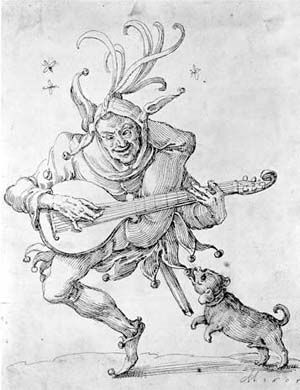 Bards are the quintessential fantasy role playing characters. They are the ones who tell the stories. They write the songs that make the XP ring. In a way, the players playing DnFnD are bards.
I’m not suggesting you sing at your games, but you know what I mean. And why rule singing out? It’s a heck of a way to liven up a session. Not recommended in apartment complexes with thin walls…
As stated in Appendix II of the PHB, in 1st Edition DnFnD, …
Read the rest of the article here.
Posted in 1st edition D&D, Editorial and tagged dnfnd by Stephen Hilderbrand with no comments yet.
Statue of Limitations
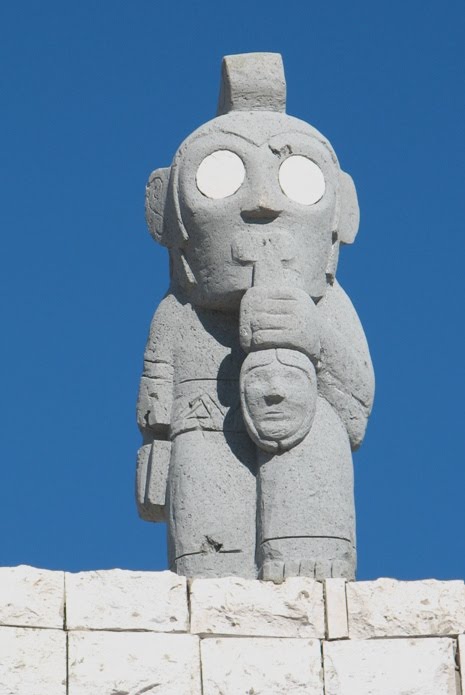 Each statue of limitations appears to be a humanoid statue between eight and twelve inches, with one feature diminished in size. These features correspond with which stat attribute they limit to a highest value of 14. Greater statues of limitations limit these values to 10, lesser to 18.
When the figurine is worn around one’s neck, its effects radiate 5′ in all directions, affecting others.
If a statue of limitations is broken or destroyed, its effects are nullified, its power departed.
Each feature on the statue that appears diminished on the statue is so limited. Figurines with all six attributes limited appear with all six features diminished.
Price: 8,000gp, lesser 4,000gp, greater 16,000gp.
Posted in Magic Item and tagged cursed, necklace, statue by Stephen Hilderbrand with no comments yet.