Fresco of Entrapment – Variable Level Warder
Powerful magic users will sometimes enchant their fortress’s walls with these Frescoes of Entrapment – brightly painted images of guardians with the power to absorb those who touch the walls.
This wall or door is painted with colorful, gilded images of guardians – each unique.
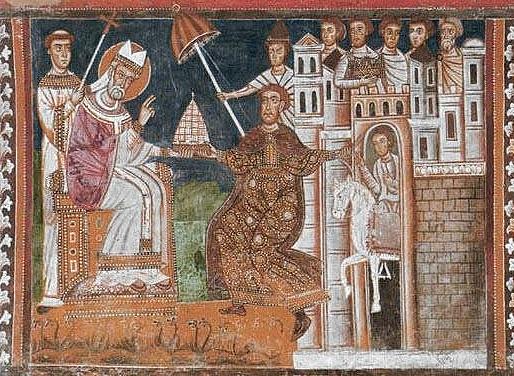
Perception (easy) – the images of warriors are very detailed, and there seems to be little in common among them.
Arcana (easy) – the observer realizes that this is an enchanted wall. (medium) – the observer understands the nature of the trap. (hard) the observer gains or can grant a +2 on thievery checks to disable the trap.
Thievery (medium) – the observer can tell that the painted wall stinks of magic and almost seems to pull at you, as though trying to draw you in. (hard) the observer disables a 5 foot section of the wall by scraping off or covering up the paintings. Failure on this check results in an attack by the wall.
History (easy) – the images do not seem to depict any historical event or personages that you know of.
Attack – Immediate Reaction, when a creature touches the wall – trap level +2 vs. Will
Hit: the target is stuck to the wall and immobilized (save ends). A Strength check (DC: hard) can free the target and end the effect. First failed save – the painted figure the target is touching begins to take on the appearance of the target. Second failed save – if still touching the wall, the target is absorbed into the painted figure which now looks exactly like a painting of the target. Once absorbed, a Break Enchantment or similar ritual is required to free the target.
Encounters – brutes who can push and controllers can up the ante of this warder by pushing characters against the wall where they become trapped. Artillery can be stationed on battlements atop the wall, melee fighters on the field in front of it.
Heroic
- Fresco of Entrapment (level 8 warder)
- Young Chimera (level 8 solo controller)
Paragon
- Fresco of Entrapment (level 13 warder)
- 1 balhannoth (level 13 elite lurker)
- 2 kuo-toa marauders (level 12 skirmisher)
- 2 kuo-toa harpooners (level 14 soldier)
Epic
- Fresco of Entrapment (level 24 warder)
- 2 bluespawn godslayers (level 22 elite brute)
- 1 storm giant (level 24 controller)
Posted in Uncategorized and tagged trap: warder by Adam A. Thompson with no comments yet.
Sithadel
Sithadel is an elf of the Kitel Woods to the west of the former kingdom of Soguer. There he lives a solitary life in the wilderness hunting the game of the feywild for meat, hides, sinew, bone and teeth. He claims no allegiance to any of the elven houses, though he is not hostile to any of them as a whole. He has a fierce hatred for anything that encroaches on the elven lands, be it orc, goblin, man or dwarf, and has fought all of them both alone and at his elven brethren’s sides.
A wild and spontaneous elf, his heart burns with passion for life, whether dancing with fey beneath the open sky, running through the woods after his prey, or standing on a mountaintop watching the sunrise. All these things make his heart swell with joy at creation’s raw glory. Not one to plan or analyze, Sithadel acts decisively based on his instincts.
Sithadel ✦ Level 11 Barbarian (Frenzied Berserker)
Medium Natural Elf ✦ XP 600
Initiative +15 Senses Perception +13
HP 85; Bloodied 42 Healing Surges 8
AC 22 (+5 on full defense or second wind); Fortitude 20, Reflex 20, Will 18
Resist 5 cold and fire
Speed 7
Attack
+15 longspear, 1d10+8 (+3 when raging, +1d6 when charging)
Features
- Frenzied Blood (when spending an action point to attack, deal half damage on a miss)
- Warpath (+2 damage while raging, must attack when starting adjacent to an enemy)
- Feral Might: Swift Charge (Encounter, Free Action – when dropping a target to 0 HP, gain 6 temp HP and charge an enemy, use a healing surge if charge hits)
- Rampage (make a free melee basic after a crit)
Powers
At-Will
- Wild Shape
- Howling Strike (can use with charge (+2 speed when raging) Str vs AC, 2[w]+str)
- Pressing Strike (shift 2, attack Str vs AC, [w]+str (+1d6 while raging), push 1)
Encounter
- Pounce (Beast Form, Can use when charging, Wisdom vs. Reflex, 1d8 + wisdom damage, Target provides combat advantage to the next attack that targets it within 1 turn)
- Great Cleave
- Hammer Fall
- Curtain of Steel
- Persistent Frenzy
Daily
- Rage Strike (2 / day)
- Mace Tail’s Rage (3[w] + knock prone, gain 5 temp HP on any hit)
- Silver Pheonix Rage (2[w] + ongoing 5 fire, gain regen 3, and can spend a HS when dropped to 0 HP)
- White Tiger Rage (2[w] cold damage + immobilized, adjacent enemies are slowed)
Utility
- Combat Sprint (move 11 squares)
- Instinctive Charge (at start of combat get +5 init, +2 to first attack)
- Black Harbinger (wild shape to a tiny raven, fly 7)
Alignment neutral Languages Common
Feats Initiate of the Old Faith (Multiclass Druid), Paragon Defenses, Rageblood Recovery, Improved Initiative, Quickdraw, Deadly Rage (+1 damage when raging), Acolyte Power (Multiclass Utility)
Skills Acrobatics +14, Athletics +15, Nature +13, Perception +13
Str 21 (+10) Dex 18 (+9) Wis 16 (+8)
Con 11 (+5) Int 9 (+4) Cha 11 (+5)
Equipment: defensive longspear +3 (+3 to defenses on full defense or second wind), wounding longbow +1, pinning dagger +1, elven battle hide armor +2, cloak of survival +2, Bracers of Defense (interrupt – reduce damage or an attack that just hit by 10), Horned Helm (+1d6 damage on a charge), Ironskin Belt (daily – gain resist 5 for 1 turn), Bag of Holding, Parry Gauntlets (+2 defenses on full defense or second wind), 4 potions of healing, 220 gold worth of carved ivory
Posted in 4th edition Dungeons & Dragons, Character by Adam A. Thompson with no comments yet.
Heritage Feats
These feats represent mixed ancestry from another race and give your character powers or abilities inherited form their other bloodlines. You can use these feats to represent the arcane tendencies that come from having an eladrin great-grandmother, or the temper from a distant dragon in your family tree.
Characters of any race can take these heritage feats – even from the race that your character already has. When you take a heritage feat from your own race, it represents a particularly strong bloodline that your family has.
Once you take a heritage feat from a particular race, you count as a member of that race for the purposes of meeting prerequisites for that race’s racial feats. In this way heritage feats work somewhat like multiclass feats, in that they give your character access to feats they did not already have. Of course, just because you have access to the feat does not mean you can take advantage of it. For example, a little dragonborn heritage does not give a character a breath weapon, so the feats that modify that breath weapon would do nothing for your character.
These feats do not count as prerequisites for racial paragon paths or epic destinies.
All the feats presented below are available to characters in the Heroic tier.
Dragonborn
- Dragonborn Anger – Encounter, Free Action – You receive +1 to your next single attack roll. Usable only when bloodied.
- Dragonborn Recovery – Daily, Free Action – Add your Constitution modifier to the next healing surge you use.
Dwarf
- Dwarven Gut – Gain resist 1 poison, and a +2 to saves against ingested poisons.
Eladrin
- A Touch of Fey Magic – Your character gains use of the wizard cantrips.
- Roots in Another World – Add +1 to the distance of all your teleports.
Elf
- Lively Step – Encounter, Free Action – Add +2 to your move speed until the beginning of your next turn.
- Elven Senses – Gain a +1 to your Perception checks.
Half-Elf
- Turn on the Charm – Encounter, Minor Action – Add +2 to your diplomacy or bluff checks for the remainder of this encounter or the next 5 minutes.
Halfling
- Just a Little More – Daily, Free Action – Add +1 to one roll that you just failed.
- Big Heart – Receive a +2 racial bonus to saves vs powers with the fear keyword.
Human
- Heave Together – When successfully assisting on a skill check, add +3 instead of +2 to the total skill check.
Tiefling
- Arcane Blood – Receive a +1 racial bonus to Arcana skill checks.
- Feindish Skin – Gain resist 2 to either cold, poison, electricity, or thunder.
Posted in Uncategorized and tagged feat by Adam A. Thompson with no comments yet.
Dunheng Side Door
Invented by the dwarves of the Dunheng Kingdoms, these hidden and trapped doors are also used by the gnomes and ice kobolds in the northern reaches of the Stokaraz Mountains.
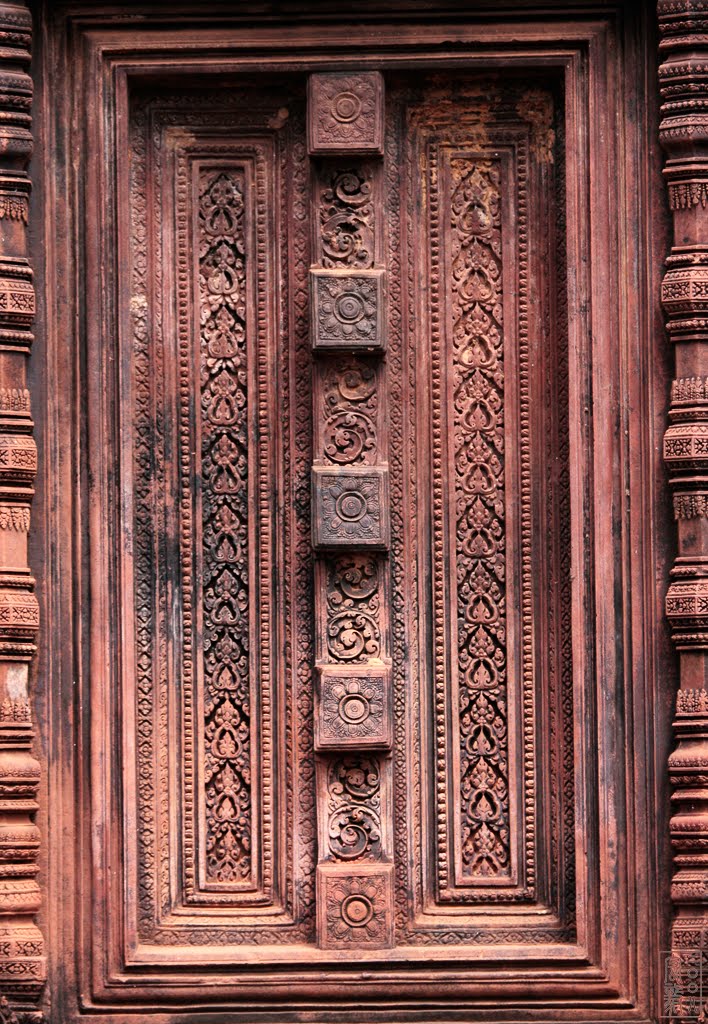 Dunheng side doors are typically used as a secondary entrance to a dwarven complex, or as the main entrance to a secret area.
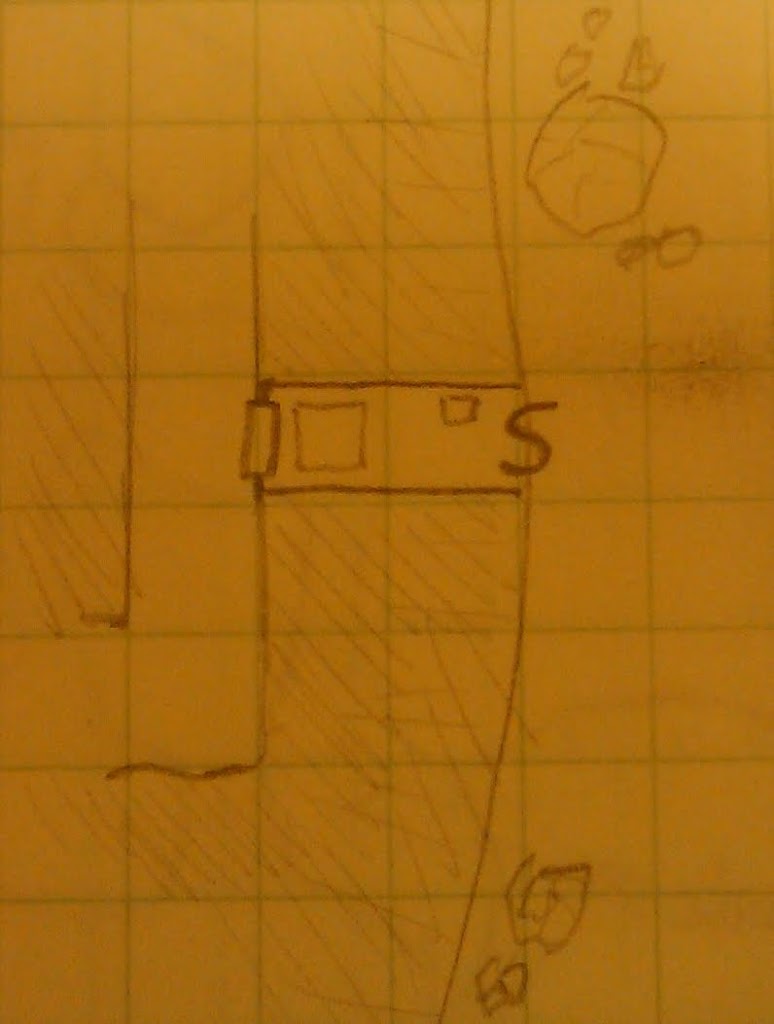 For DCs and damage for this variable level trap, refer to the Difficulty Class and Damage by Level chart in the DMG.
Perception: DC (medium): Success – you notice the concealed door.
Looking over the stone cliff face, you notice that an oval, 5 foot high rock leaning against the cliff looks like it might be easy to move.
If the characters open the door, they see the following:
Opening the hidden door, you find that it swings out on hidden metal hinges to reveal a ten foot long, four foot wide passage of worked stone walls with a flagstone floor and a low ceiling. At the far end of the passage stands a stone door.
The door at the end of these hallways is generally locked.
Perception: DC (hard + 2): Success – you notice a small pressure plate under the flagstones.
As you are about to step into the passage you notice that a small flagstone to the side of the passage has no mortar around it. Touching it gingerly, you notice that it moves slightly.
Once a character enters the hallway, they may notice the following:
Perception: DC (hard + 2): Success – you notice the suspended stone block at the end of the passage.
Looking at the low ceiling, you notice that the last 5 feet of the ceiling in this hall has a seam running around it, delineating a 4 foot wide stone square. Closer examination reveals that the seam appears to run up into the ceiling some way.
Perception: DC (hard + 2): Success – you notice a second pressure plate under the flagstones at the end of the passage.
As you are about to proceed to the end of the passage you notice that a large flagstone in the middle of the passage has no mortar around it. Touching it gingerly, you notice that it moves slightly.
How it works – When a character enters the hallway they can disable the trap by standing on the pressure plate and closing the door behind them. If they do this, the second pressure plate does not drop the stone block.
When a character enters the second square of the hallway and steps on the pressure plate the stone block suspended above to drops on them, possibly trapping them beneath it and blocking the hallway.
Trap
Attack (Immediate Interrupt, when a character enters the square at the end of the hallway): Level +3 vs Reflex
Hit: Limited High Damage, and the target is pinned. While pinned, the target takes ongoing 5 damage per tier and is immobilized. A creature can free themselves or an adjacent pinned creature with a DC Hard Strength check as a Standard Action.
Miss: Half damage and the target is pushed 1 Square back into the hallway.
Effect: The weighty stone block that has fallen now completely blocks the hallway. As a Standard Action a character can make a DC Hard + 10 Strength check to lift up the block, and must make the same check every round they hold the block up, or else be subject to the attack again. The block has 80 HP.
Countermeasures
Acrobatics: if a character has noticed the second pressure plate at the end of the hallway, they can make a DC Medium Acrobatics check to balance on flagstones around the pressure plate as they unlock and open the door and pass through the trapped square. Failing this check sets off the trap.
Thievery: DC Hard thievery check to disable the second pressure plate. Failing this check by more than 5 results in the trap being set off, attacking the character making the thievery check and any assisting them.
Strength: DC Hard Strength check to brace or block the stone block – though holding the block up bodily require a new Strength check every round as above. Using pitons or another object to wedge the block gives a +2 on this check, though they will only hold the great block’s weight for 1d12 rounds after the trap is triggered.
XP: Award XP for bypassing this variable level trap according to the XP chart in the DMG.
Posted in Uncategorized and tagged secret door, trap: warder by Adam A. Thompson with no comments yet.
Grove of Bones
This location was created when a mad druid took up the necromantic elements of sorcery. First he consecrated the area with an evil bent, then he turned an entire grove of fine alder trees into bones, using the limbs to raise up an army of skeletons and bone golems.
Throughout the grove are creeping vines, represented in dark green on the map. There is a 1 in 6 chance that each vine will attack as the party passes within the 10′ reach of the vines. Once one vine attacks, every vine will attack a character that steps within 10′ of the vine. This automatic attack includes vines within 10′ of a character when the first vine attacks.
Each white circle on the map represents the trunk of bone. Those lying sideways are horizontal with the exception of two that are leaning against other bones. The grey areas are stone, the brown wood or road. Each number on the map corresponds to a location or set of locations described below.
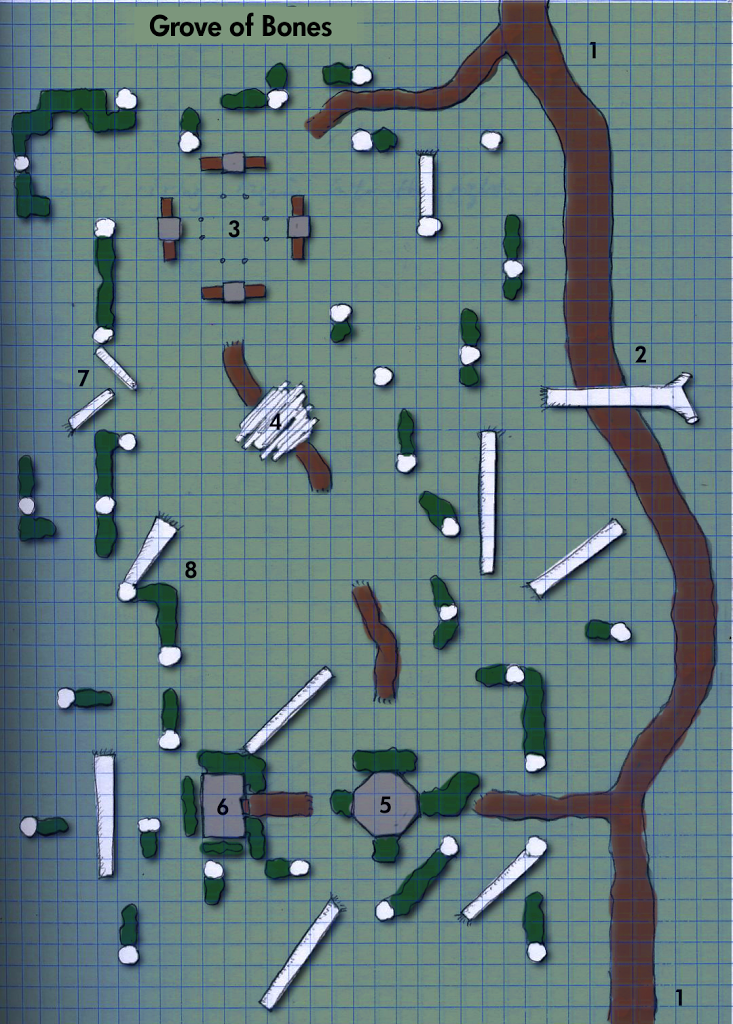 1 The Approach
The wind grows still and the squawk of avians silent as you approach this fork in the road. The primary direction continues before you where it is blocked by a felled, forty-foot trunk. A smaller path heads into a grove of birch trees, their trunks covered in a white bark. The area smells of charnel.
If the characters study the trees more carefully, for instance walking up to one and trying to harvest its bark for parchment, they will notice that the trunks are not normal. A DC 15 Knowledge Nature check will reveal that they have a sturdy-yet-porous feel not unlike bone.
2 Felled Trunk
A tree with a 7′ diameter trunk blocks the road before you. Spider webs cling to the underside of the rounded trunk, running to the ground in threads woven so thick that you cannot see the ground.
If characters try to scale the bone tree, they must make a DC 20 Jump check to reach the upper side of the bone, and then a DC 20 Climb check to continue to scale the bone. if they fail, they will find the trunk too smooth to climb, and will slip off. Those who succeed can walk along the trunk at half speed with a DC20 Balance check.
Characters who linger at the base of the trunk for more than 3 turns will be attacked by a group of 4 dire spiders, who climb up through the webbing. Characters within 15′ of the trunk when the combat begins have a 1 in 6 chance of standing in some webbing, requiring them to make a DC 20
Reflex save or be stuck as if under the effect of a web spell as the fight breaks out.
After the combat, if the characters search under the trunk, they will find the crushed remains of a skeletal humanoid, his leather backpack intact. The backpack contains 2 cure medium wounds potions, a potion of momentary clarity, and a scroll of freedom of movement. On the skeleton’s feet is one boot of speed. The other is on one of the skeletons that the party faces with the necromancer. If they check carefully, they will notice the match on the skeleton.
3 Summoning Circle
Chips of wood and bone dot the ground around this 15′ circle surrounded by four stone obelisks. The obelisks have wooden adornments that serve as appendages emanating from the stone bases. The circle is rimmed with alternating white and black stones the size of a human fist. The weeds are kept at bay just outside the rocks; inside the circle there is no grass nor weed.
The chips are fairly long and narrow, and do not appear to have been made with axes or other normal blades, as the edges are serrated.
The obelisks are abstract representations of four woodland animals: bear, boar, owl, and wolf. The wooden portions provide the representations, as the stone portions are the same on each obelisk, constituting the base and the trunk. These obelisks belong to the long-dead druids who once cared for this grove.
This is where the necromancer summons creatures, growing his undead army.
4 Pile of Bones
A neatly-arranged pile of assorted bones lies in the center of the dirt path in the center of the grove.
Characters who linger at the base of the pile for more than 3 turns will be attacked by 2 bone golems, who, when killed, will rattle their bones, alerting the necromancer. If the time is right, he will attack the party. This is up to the DM. In most cases, he will attack when the party reaches location 6.
The bones are of assorted lengths, from 3″ wide and 2′ long to 3′ wide and 10′ long, and appear to have been shaped into bones. Perhaps they are true bones, perhaps they are trees-turned-bones.
5 Fitted-Stone Slab
This slab of fitted stones is stained a deep rust color.
The rust color is from blood used in sacrifice to aid the necromancer in his foul deeds.
The workmanship suggests that this slab was built some hundred or more years ago. If the characters look carefully, they will notice that the stones are arranged in the form of an owl mized with a bear. This grove once was the home of a great owlbear clan, the remains of which have been disturbed by the necromancer. This clan was befriended by the druids who then took over mantenance of the grove before their untimely end at the treacherous hands of the necromancer.
6 Stone Hut
When the party nears the hut, read or paraphrase the following:
A mound of vines obscures something large and grey underneath.
If the party clears off some of the creeping vines (by killing or otherwise dispatching with them), read aloud the following:
A well-mortared wall of a 10’x15′ fitted-stone structure shows signs of age, yet is impressively intact in the face of the strong vines that once covered it.
Inside the stone hut, in among rusted rakes and shovels with rotted handles, the party will find various necromantic items, including a scroll of transmute wood to bone, a scroll of protection from good, and a collection of notes on the anatomy of human bones and trees, with strange connections drawn between them.
Once the party loots the hut, the necromancer will appear outside and begin summoning assistance. When they fight him, he will by flanked by 12 medium skeletons, 2 large skeletons, 3 bone golems, and 2 animated owlbear skeletons, all of which quickly rush up to engage the party in melee, while he casts spells from afar. In their rush into the melee, the owlbears knock over some of the remaining bone trees, creating dynamic terrain hazards. The bone golems and large skeletons will even lift some of the bones out of the pile at location 4 to use as large bone clubs against the characters.
7 Twin felled bones
Two twin bones have been knocked over here, forming a small space between which run thickly-woven spider webs.
In among the bones, the party discovers the remains of an old graveyard, with headstones written in a strange and ancient language. This is where the necromancer raised his skeletons out of their ancient graves.
8 Angled bone
A large bone leans against a standing one, providing a perilously balanced cover.
This bone of course, could at any moment be knocked loose, for instance in combat or if a character attempts to walk upon it, requiring anyone above or below it to make a DC 20 Reflex save to avoid taking 2d8 damage from the falling bone.
Posted in 3rd edition Dungeons & Dragons / d20 fantasy / Pathfinder, Adventure and tagged creature type: plant, golem, grove, Location, owlbear, spider, wilderness by Stephen Hilderbrand with no comments yet.
Asteroth: Demon Liche
Asteroth is an ancient demon who through a bizarre series of events and a strange curse survived his own destruction. Now, by the use of his arcane powers, he persists as a liche.
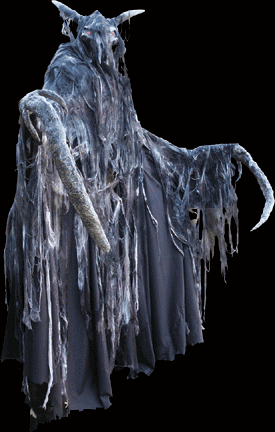 In the centuries since then he has served as a mercenary wizard, enchanter and sage to many of the most powerful and important personages of the underworlds. None know where his sanctum lies.
Asteroth is the creator of the spell Asteroth’s Snare.
His normal form is a towering skeletal humanoid with the skull of a jackal and glowing, red eyes, but often he appears in other guises. He leaves a trail of ash wherever he walks.
Asteroth CR 22
Size Large Undead Outsider (Evil)
Wizard 17
Alignment: Neutral Evil
Languages: Abyssal, Telepathy to 100 feet
Senses: darkvision, Listen +12, Spot +15
Initiative: +6
AC: 26 (flatfooted 19, touch 14), +1 dodge bonus against one target, +4 with Shield cast, +4 vs. attacks of opportunity when moving
DR 15 / bludgeoning and magic and 10 / adamantium from Stoneskin
Hit Dice: (22d12)
Hit Points: 136
Saves: Fortitude: +11, Reflex: +13, Will: +21
Immune: cold, electricity, paralysis, mind-affecting attacks, poison, acid
Resist: 20 cold, 20 fire
Aura: fear (affects creatures of 5 HD and less within 60 feet, Will DC 24 negates)
Turn Resistance: +4
Spell Resistance: 29
Speed: 40 ft.
Attacks: +13 negative energy touch
Damage: 1d8+5 (Will DC 24 halves) and permanent paralysis (Will DC 24 negates)
Face / Reach: 10 ft. / 10 ft.
Feats: Combat Casting, Craft Wand, Craft Wondrous Item, Dodge, Forge Ring, Improved Initiative, Mobility, Scribe Scroll, Spell Penetration, Greater Spell Penetration
Special Abilities & Qualities: See Below
Abilities: STR 17 (+3), DEX 15 (+2), CON – (-), INT 28 (+9), WIS 18 (+4), CHA 19 (+4)
Skills: Appraise 10; Balance 2; Bluff 5; Concentration 29; Decipher Script 9; Diplomacy 9; Hide 11; Knowledge (Arcana) 28; Knowledge (Architecture and Engineering) 10; Knowledge (Dungeoneering) 9; Knowledge (Geography) 10; Knowledge (History) 13; Knowledge (Local) 14; Knowledge (Nature) 10; Knowledge (Nobility and Royalty) 14; Knowledge (Religion) 12; Knowledge (The Planes) 15; Listen 12; Move Silently 10; Ride 4; Search 17; Sense Motive 13; Spellcraft 30; Spot 15; Survival 3; Swim 1;
Possessions: Amulet of Natural Armor +3; Ring of Protection +3; Bracers of Armor +4; Cloak of Resistance +4; Headband of Intellect +4; Wand of Cat’s Grace; Wand of Scorching Ray (11th level caster); Wand of Lightning Bolt (10th level caster); Wand of Magic Missile (9th level caster); Wand of Polymorph; Wand of Suggestion;
Spell-like Abilities (as 17th level wizard, save DC 19 + spell level): At-Will: alter self, greater teleport. 3/Day: geas, true seeing
Wizard Spells:
Spell Save DC:19 + spell level
Mana: 193
Level 0 (4 / day): Arcane Mark, Daze, Detect Magic, Touch of Fatigue
Level 1 (7 / day): Identify, Ray of Enfeeblement x 2, Shield, True Strike, Charm Person, Protection From Good
Level 2 (6 / day): Mirror Image, Detect Thoughts, Invisibility, Resist Energy, Touch of Idiocy, Web
Level 3 (6 / day): Blink, Slow, Fly, Fire Ball, Vampyric Touch, Protection From Energy
Level 4 (6 / day): Enervation, Fire Shield, Greater Invisibility, Mass Reduce Person, Stoneskin, Resilient Sphere
Level 5 (6 / day): Feeblemind, Baleful Polymorph, Telekinesis, Dominate Person, Wall of Force, Cloudkill
Level 6 (5 / day): Flesh to Stone, Globe of Invulnerability, True Seeing, Greater Dispel Magic, Repulsion
Level 7 (4 / day): Mage’s Sword, Spell Turning, Finger of Death, Force Cage
Level 8 (3 / day): Horrid Wilting, Clenched Fist, Temporal Stasis
Level 9 (2 / day): Mass Hold Monster, Time Stop
Summon Daemon: once per day, Asteroth can summon 3d6 Canaloths or 2d4 Nycaloths with 100% chance of success, or 1d6 Nycoloths or 1 Ultroloth with a 50% chance of success. See the Manual of the Planes for statistics of these fiends.
Fear Aura (Su): Liches are shrouded in a dreadful aura of death and evil. Creatures of less than 5 HD in a 60-foot radius that look at the lich must succeed on a Will save or be affected as though by a fear spell from a sorcerer of the lich’s level. A creature that successfully saves cannot be affected again by the same lich’s aura for 24 hours.
Turn Resistance (Ex): A lich has +4 turn resistance.
Immunities (Ex): Liches have immunity to cold, electricity, polymorph (though they can use polymorph effects on themselves), and mind-affecting attacks.
Posted in 3rd edition Dungeons & Dragons / d20 fantasy / Pathfinder, Creature and tagged creature type: demon, outsider, undead by Adam A. Thompson with no comments yet.
Magic Mirror
This large oval gold-framed mirror stands on three thick legs. The carvings at the base depict winged lion-women supporting the mirror, and the top arch of the frame is decorated with moons, from crescent, ascending to half, to full at the top center, then descending to half and to crescent again.
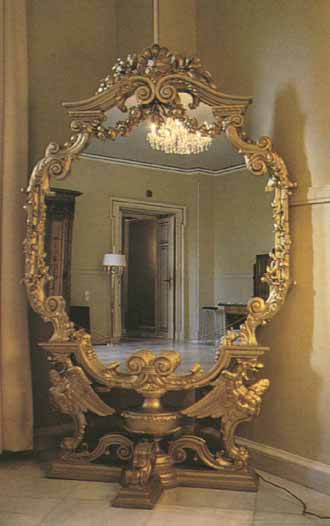 Magic Mirror
Wondrous Item
level 30
3,125,000 Gold
Power (Daily, 10 minutes activation time) – Standing before the mirror allows one to cast the Observe Creature ritual without having to know the ritual or expend any components.
Power (Monthly, Standard Action) – Standing before the mirror allows one to open a magic teleportation portal to the place that is being observed by the mirror’s Observe Creature power. The mirror forms one side of the portal, and a faintly glowing doorway appears at the point being observed. As long as the portal remains open it can be passed through both ways. When opening the portal, make an Arcana check to determine how long the portal remains open:
- Arcana DC 19 or lower – 1 Round
- Arcana DC 20-29 – 3 rounds
- Arcana DC 30-39 – 5 rounds
- Arcana DC 40 or higher – 10 rounds
Posted in Uncategorized and tagged equipment: magic wondrous item by Adam A. Thompson with 1 comment.
Inquisition Mage Hunter
Shan’n’nur Inquisitor Mage Hunter – Level 14 controller (leader)
Medium natural human ✦ XP 1,000
Initiative +8 Senses Perception +10
HP 140; Bloodied 70
AC 28; Fortitude 25, Reflex 26, Will 27
– also see witchwarden shield
Speed 6
Powers
Arcane Blast ✦ At-Will, Standard Action, Close Burst 3
arcane, force
A transparent wave of force batters you away from the Inquisitor.
Target: Enemies in burst
Attack: +16 vs. Fortitude
Hit: 1d10 + 6 force damage, and push the target 3 squares.
Cleansing Fire ✦ At-Will, Standard Action Range 10
arcane, radiant
“Defilers! May the holy flames cleanse your impurities!”
Attack: +18 vs. Reflex
Hit: 1d10 + 6 radiant damage. All Shan’n’nur within 5 squares of the target receive 4 temporary hit points and +1 to attacks until the end of the Inquisitor’s next turn.
Inquisition’s Chains ✦ Encounter (recharge 4-6), Standard Action, Range 10
arcane, force
Glowing chains of energy bind you with a grip stronger than iron.
Attack: +18 vs. Reflex
Hit: 3d10 + 6 force damage, and the target is Stunned (save ends).
Spell Fumble ✦ Encounter, Immediate Interrupt Action, Range 10
arcane, force
Magical counter-words cancel key elements of your arcane formula, ruining the spell.
Trigger: Someone uses a power with the “arcane” keyword.
Attack: +18 vs. Will
Hit: The triggering arcane power is expended but has no effects.
Cloak of Black ✦ Encounter, Standard Action, Burst 3 Range 5
arcane
With a gesture and a magic phrase the inquisitor creates a silent darkness shrouds the corridor.
Effect: The burst creates a zone of silent darkness that is difficult terrain and lasts until the end of the caster’s next turn. No sound or sight can percieve into or through the zone.
Sustain, Minor Action: the zone persists.
Alignment neutral Languages Common, Draconic, Abyssal
Skills Arcana +18, Insight +15
Str 12 (+8) Dex 13 (+8) Wis 17 (+10)
Con 20 (+12) Int 23 (+13) Cha 20 (+12)
Equipment: inquisitor’s black cloak and inquisitor’s mask, witchwarden shield, ritual dagger, wand, orb.
Posted in Uncategorized and tagged creature type: humanoid, creature: paragon controller by Adam A. Thompson with no comments yet.
Inquisitor’s Mask
The officials of the Shan’n’nur Inquisition wear these masks during rituals and when in public performing their mysterious duties and enforcing the will of their cult.
The masks give the Inquisitors several abilities they find useful as they police the use of magic in the areas they control.
Mask of the Shan’n’nur
Head Slot
Level 15
25,000 gold
Power (Encounter, Standard Action): Charming Gaze – +5 to your next Intimidate, Diplomacy or Bluff check this encounter.
Power (Encounter, Standard Action): Terrifying Gaze – one target in close blast 5, Int. or Cha. vs. Will, chose either: the target is dazed until the end of your next turn, or weakened (save ends).
Power (At-Will, Minor Action): +5 on your next arcana check to detect or identify magic.
Power (At-Will, Minor Action): Detect Evil/Good/Law/Chaos: the wearer can detect alignments opposite to their own.
Posted in Uncategorized and tagged equipment: magic helm, subplot: the Shan'n'nur by Adam A. Thompson with no comments yet.