Wil’nniea and Wil’ancyn, Sister Enchantresses and Water Mages
Born together in the desert, Wil’nniea and Wil’ancyn were raised in a temple dedicated to the worship of magic and water. Underground cisterns and mysterious rituals surrounded them as small girls.
As they grew up in this desert temple of Baccob, god of magic, they learned many things. Each of their mystical abilities grew, similar but different, like two mirror images, one dark and one light. Wil’nniea’s abilities were wild and rooted in her love of the natural world. Wil’ancyn’s talents came to her through worship, study, and the devotions she shared with the others in the temple.
In later life they were among a very few preistesses of Baccob that escaped the great Anmagus Crusade, and eventually fought in battle against the champions of the Order of the Sword of Light defending the last standing temple of Baccob in the northern reaches of the middle kingdom. They were able to ward the Crusaders off, and the siege lay unbroken for seven years, until the Crusade was finally ended by the High Pontiff of Heronious and the Order was recalled and sent on other errands.
Of course by this time the Crusade had achieved it’s end: the arts of magic were practiced only in secret throughout all of the middle kingdoms, and the worship of Baccob was unknown among it’s peoples.
Presented below are their stats as they were during the siege of the Temple of Boccob.
Wil’nniea CR 10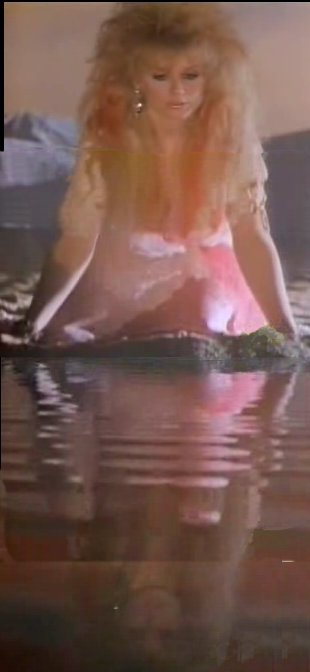
Female human sorceress 4 druid 6
Neutral with chaotic tendencies Size Medium humanoid
Init: +0 Senses: Listen +3, Spot +3
Languages: common, auran
AC: 16 (natural armor +2, mage armor +4) touch 10, flatfooted 16
HP: 53 (HD 4d4+6d8+10)
Resist: resist nature’s lure
Fort: +6 Ref: +3 Will: +9
Move: 40 ft.
Attack: +6 scimitar (1d8+1 and 1d6 fire / 18-20 ×2)
Full Attack: +6 / +1 scimitar (1d8+1 and 1d6 fire / 18-20 ×2)
Attack Options: alternate form: leopard (see below)
Space / Reach: 5 ft. / 5 ft.
Base Attack: +6 Grapple: +5
Wil’nniea In Animal Form as leopard:
AC: 21 (+3 natural armor, +4 dex, +4 mage armor)
Move: 50 ft, climb 20 ft.
Full Attack: Bite +10 melee (1d6+3) and 2 claws +5 melee (1d3+1)
Special Attacks: Improved grab, pounce, rake 1d3+1
Attributes: Str 16, Dex 19, Con 15
Abilities Str 9 Dex 11 Con 13 Int 12 Wis 16 Cha 15
SQ: Resist nature’s lure, Animal companion, nature sense, wild empathy
SA: Woodland stride, Trackless step, Wild shape (2/day),
Feats: 5 Natural Spell, Eschew Materials, Self Sufficient, Enfurance, Diehard
Skills: 45 druid, 12 sorcerer 14 human, +3+2 Bluff, +14+1 Concentration, +14+1, +4 Jump, Knowledge Nature, +1+1 Knowledge Relirion, +3+3 Sense Motive, +14+1 Spellcraft, +14+3 Survival,
Druid Spells Prepared:
1st: 5 / day: cure light wounds, magic fang, cure light wounds, produce flame
2nd: 3 / day: bear’s endurance, flameblade, fog cloud
3rd: 3 / day: cure moderate wounds, call lightning, daylight
4th: 2 / day: flame strike, ice storm
Sorcerer Spells Available:
1st: 6 / day: mage armor, ray of enfeeblement, protection from law
2nd: 3 / day: invisibility
Posessions: +1 flaming scimitar, amulet of natural armor +2, boots of striding and springing, holy symbol
Familiar: desert snake
Animal Companion: White leopard: Medium Animal
Init: +5 Senses: Low-light vision, scent
Listen +7 Spot +6
AC: 18 (+5 dex, +3 natural)
HP: 34 (HD 5d8+10)
Fort +6, Ref +9, Will +2
Move: 40 ft (8 squares), climb 20 ft.
Attack:
Full Attack: Bite +7 melee (1d6+3) and 2 claws +2 melee (1d3+1)
Atk Options: pounce, rake
Space / Reach: 5 ft / 5 ft
Abilities: Str 17, Dex 20, Con 15, Int 2, Wis 12, Cha 6
Skills: Balance +12, Climb +11, Hide +8*, Jump +11, Listen +8, Move Silently +8, Spot +6
SQ: evasion, share spells
Wil’ancyn CR 10
10
Female human wizard 8 cleric 3
NG with lawful tendencies Size Medium humanoid
Init: -1 Senses: Listen +2, Spot +2
Languages: common, aquan, auran, gnoll
AC: 18 (-1 dex, +1 deflection, +4 mage armor, +4 shield) touch 10, flatfooted 10
HP: 48 (HD 8d4+3d8+10)
Fort: +2+1 Ref: +2-1 Will: +6+2
Move: 30 ft.
Attack: flail +6 (1d8)
Full Attack: flail +6 (1d8)
Space / Reach: 5 ft. / 5 ft.
Base Attack: +4 Grapple: +5
Abilities Str 13 Dex 9 Con 12 Int 17 Wis 14 Cha 11
SA: Turn Undead,
Feats: Scribe Scroll, Eschew Materials, Brew Potion, Improved Counterspell, Persuasive, Leadership, Craft Wand
Skills: 59 wiz, cleric 18: +14+1 Concentration, +7 Diplomacy, +7+2 Heal, +14 Knowledge Arcana, +14 Knowledge Religion, +7+2 Profession Clergy, +14+3 Spellcraft
Wizard Spells Prepared:
1st: 5 / day: mage armor, sheild, expiditious retreat, burning hands, enlarge person
2nd: 4 / day: glitterdust, web, protection from arrows, invisibility
3rd: 4 / day: heroism, blink, slow, fireball
4th: 2 / day: black tentacles, stoneskin
Cleric Spells Prepared:
1st: 3+1 / day: bless, divine favor, shield of faith, sanctuary*
2nd: 2+1 / day: aid, shield other*, silence
Domains: protection, water
Posessions: +1 flail, ring of protection +1, wand of magic missile (4d4+4 at 7th level, 35 charges), holy symbol.
Familiar: dove
Cohort: Tamilla-ossalur, Young Brass Dragon
CG Female True Dragon
Medium Size CR 6
Init: +0 Senses: Darkvision 120 ft, Blindsense 60 ft, Lowlight Vision x 4
Listen +15 Spot +15
AC: 19 (+9 natural), touch 10, flat-footed 19
HP: 85 (HD 10d12+20)
F: +9 R: +7 W: +8
Immunities: Fire
Weaknesses: Vulnerability to cold
Move: 60 ft., burrow 30 ft., fly 200 ft. (poor)
Attack: +12 bite 1d8 + 2
Full Attack: +12 bite 1d8+2, +7 (2)claws 1d6+1, +7 (2)wings 1d4+1
Space / Reach: 5 ft./5 ft.
Base Attack: +10 Grp: +12
Abilities: Str: 15 Dex: 10 Con: 15 Int: 12 Wis: 13 Cha: 12
Feats: Power Attack, Improved Sunder, Hover, Investigator
Skills: 79 +12+1 Bluff, +13+1+2 Gather Information, +14+1 Listen, +14+1 Search, +14+1+2 Spot, +12+1
Breath Weapon (Su): A brass dragon has two types of breath weapon, a 60 ft. line of fire for 3d6 points of damage and a 30 ft. cone of sleep. Creatures within the cone must succeed on a Will save or fall asleep, regardless of HD, for 1d6 rounds plus 1 round per age category of the dragon. DC 17
Posted in 3rd edition Dungeons & Dragons / d20 fantasy / Pathfinder, Character by Adam A. Thompson with no comments yet.
Mage hand
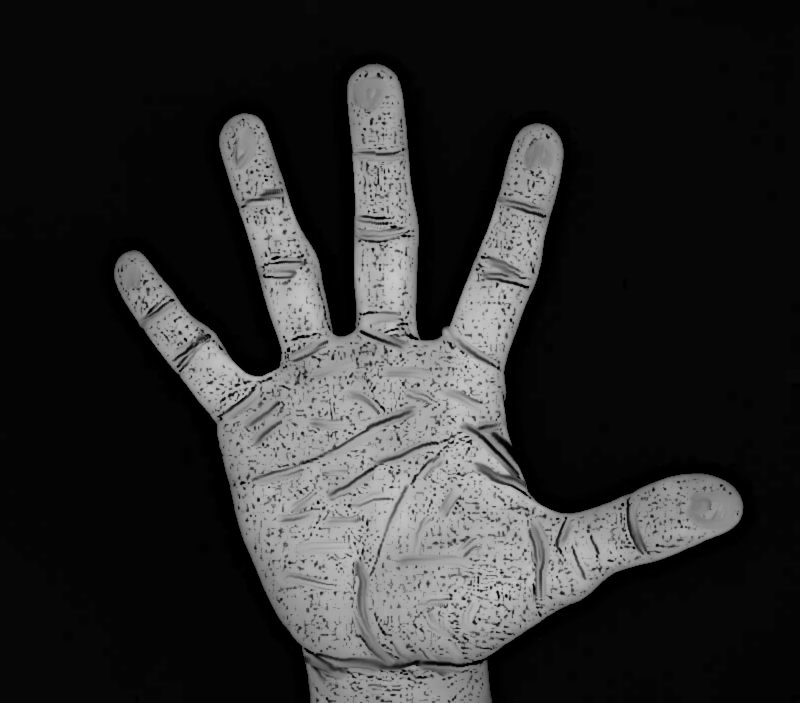 A preserved hand of a mage, usually presented in a box with a glass top.
Each hand bestows its own powers, usually indicative of the powers of the hand’s original owner when alive. Sample powers are equivalent to standard metamagic feats, without having to memorize the spells at higher levels. Other effects include not needing one of the three components: V, S, M. Still more effects are equivalent to wands.
These items are very rare, as they require a sufficiently powerful mage to die and for someone to remove his or her hand and preserve its magic.
Mage hands preserved with rings upon them usually are embodied with the power of the ring. This adds to their power and value.
Posted in Magic Item and tagged artifact, mage hand, wondrous item by Stephen Hilderbrand with no comments yet.
Lair of the Begotten
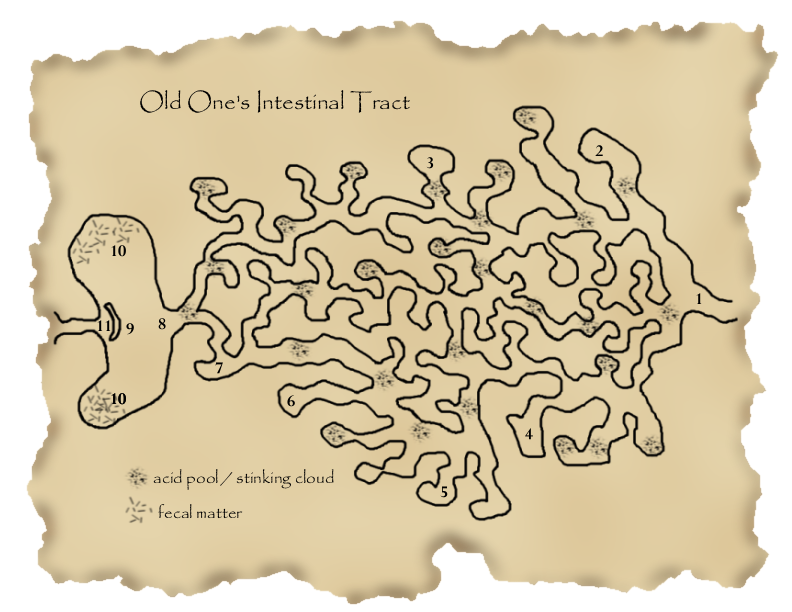 This encounter marks the penultimate encounter of the Horror of the Old Ones adventure.
1 Entrance
The walls run with a dark mucous that pools along the floor, making it difficult to navigate the space without it oozing or dripping all over. Nose hairs curl as the bile-like smell grows rises in visible clouds above the pools.
Characters failing a DC 10 Balance check will likely fall into one of these acid pools over the course of their traversal. They are denoted on the map. Above each pool is a stinking cloud. In addition, characters will inevitably walk into an area that rapidly fills with the equivalence of a weak stinking cloud, and if they fail saves, will double over in pain, and can suffer the effects very much like the spell. These encounters increase the tension and raise the stakes.
Heading up the steep passage takes the party to the Pirate Cove, though this is not likely to be an available travel option, as the passage only opens for a brief few seconds, during which thousands of gallons of water and other refuse flow into the tract. That is the only way out, save the passage behind 11.
In addition, every two minutes a new gush of water, complete with flotsam and jetsom, enters from here and passes through the tract, quickly dissipating as the water is absorbed by the walls. As soon as the party feels they will drown, the water retracts in to the walls.
2 Homes of the Begotten
Translucent sheets dominate the space, hanging in the way of the passage. The profiles of humanoid shapes amble behind them.
The begotten have taken up refuge behind little membranous tent-flaps, where they take rest here in the tract. They will attack the party if they are awakened.
Primitive tablets with indecipherable, outerworldly script litter the floors of some of the homes. The characters will only find them if they search for them though, as they are below the murky steamline. Some of these will also wash ashore after the party defeats the old one, to help bring to closure any final mysteries.
3 Begotten Warrens
Tiny begotten spew forth from slimy mounds, slithering across the acidic floor.
These young pose no threat to the party, but if attacked, twelve begotten will swarm the party from each direction down the hall.
4 Equipment Cache
In a drier spot in the tract, there is a small mound of moldy leather equipment in the far end of the chamber.
This consists of leather armor, shredded backpacks, a few rings and other adornments of the begotten, largely necklaces that they wore to hide their gills when they lived in the human colonies to avoid being outcast. There is also an amulet of water breathing among the loot.
5 Packed Bulb (Pack’d in Like Sardines)
This bulb is packed with a strange, pus-colored mucous. Within the gelatin are the compressed bodies of men with fish-like heads.
This is a diseased part of the Old One. This god has a tumor, which has spread to other parts of its colossal body. This is what makes a 10th/11th level party able to challenge it. A gelatinous blob has filled the chamber.
6 Antechamber
There are multiple mutilated skeletons of fishmen here in at the end of the chamber.
The bodies are eaten by the begotten, then cleaned off by the gelatinous rug at 7. Buried in the corpses of the fishmen are a ring of acid resistance and a wand of paralyzation.
7 Gelatinous Rug
This chamber dead ends in a gelatinous bulb, or rather a gelatinous rug, that spreads out into the corridor. Boots begin to stick to the floor.
The gelatinous rug attacks immediately, or as immediately as a rug is capable. The rug is actually spread across the floor, and curls up to trap its prey.
8 Cool Opening
The passage opens here into a swampy drum. The sounds of chewing resound against the cylindrical walls, rounded at the top and bottom of the chamber. The low chewing gives way to a rising crescendo of ululating, mud-encrusted bodies of half men, half-fish which rise out of the muck. Their rows of razor-sharp teeth chomping at the bit.
The fish men have been sucked in by the god, and what few are left are standing up for themselves, fighting off the begotten. They serve as an analog to the tumor which ails this elder god. they do not attack the party, as long as they are shown an alternative. Some of these fish-men will follow the party into battle against the Old One once the party passes through 11.
9 Fleshy Flap
A large, pink, fleshy flap opens and closes at regular intervals, and dung slides from the heaps and shoots out an opening.
This flap, unfortunately, blocks the only way out. Luckily it does open, and can be slashed open as well, causing internal bleeding and hemorrhaging of the body the characters are spelunking.
10 Dung Heaps
The piles of dung here seem to move.
In the dung heaps are six otyughs which attack as the players draw near, their flailing arms covered in feces.
11 Dank Passage
The players will pass very quickly through this passage on their way out the poop chute, which opens of its own volition overy ten minutes or so. Thousands of tiny cilia line the walls, and help force solid objects out to the Old One.
This passage leads to the final encounter with the Old One (add link here).
Posted in Encounter and tagged Horror of the Old Ones, Location by Stephen Hilderbrand with no comments yet.
Gelatinous Variants
These variants are much like a gelatinous cube, with the noted exceptions.
The gelatinous rug spreads ‘cross floors.
The gelatinous blob sit in piles.
The gelatinous door coats normal doors.
The gelatinous film stretches for miles.
Do they stick to your hand?
Will you stick to the floor?
Can they be a rubber band?
Can they get through your pores?
Yes.
Gelatinous Blob
(as cube, with a slightly different look, a blob rather than a clear-cut cube, making them easier to spot than their neatly-carved cousins)
Gelatinous Film
(as rug, but covering an acre, 2″ thick and they can be found outdoors, in shady forest grottos)
Gelatinous Rug
Size/Type: Large Ooze
Hit Dice: 4d10+32 (54 hp)
Initiative: -5
Speed: 15 ft. (3 squares)
Armor Class: 4 (-1 size, -5 Dex), touch 4, flat-footed 4
Base Attack/Grapple: +3/+7
Attack: Slam +2 melee (1d6 plus 1d6 acid)
Full Attack: Slam +2 melee (1d6 plus 1d6 acid)
Space/Reach: 10 ft./5 ft.
Special Attacks: Acid, engulf, paralysis
Special Qualities: Blindsight 60 ft., immunity to electricity, ooze traits, transparent
Saves: Fort +9, Ref -4, Will -4
Abilities: Str 10, Dex 1, Con 26, Int Ø, Wis 1, Cha 1
Skills: —
Feats: —
Environment: Underground
Organization: Solitary
Challenge Rating: 3
Treasure: 1/10th coins, 50% goods (no nonmetal or nonstone), 50% items (no nonmetal or nonstone)
Alignment: Always neutral
Advancement: 5-12 HD (Large); 13-24 HD (Huge)
Level Adjustment: —
The nearly transparent gelatinous rug lies in wait along dungeon corridors and cave floors, absorbing wastes and pests. Inorganic material remains trapped and visible inside the rug’s body.
Most gelatinous rugs are 15 feet long and 6 inches thick, weighing half a ton, though much larger specimens are possible.
Combat
A gelatinous rug attacks by curling its body into prey stick to its center. The fringed ends of the rug then link together, engulfing unwitting creatures in a tight, suffocating maw.
Acid (Ex): A gelatinous rug’s acid does not harm metal or stone.
Engulf (Ex): Gelatinouss rugs move slowly, and often not for long periods of time. It cannot make a slam attack during a round in which it engulfs. The gelatinous rug merely has to move over the opponents, affecting as many as it can cover. Opponents can make attacks of opportunity against the rug, but if they do so they are not entitled to a saving throw. Those who do not attempt attacks of opportunity must succeed on a DC 13 Reflex save or be stick to the rug; on a success, they must move to the back or side (opponent’s choice) as the rug moves forward. Stuck creatres are likely to be engulfed during the rug’s next action. Engulfed creatures are subject to the rug’s paralysis and acid, and are considered to be grappled and trapped within its body. The save DC is Strength-based and includes a +1 racial bonus.
Paralysis (Ex): A gelatinous rug secretes an anesthetizing slime. A target hit by a rug’s melee or engulf attack must succeed on a DC 20 Fortitude save or be paralyzed for 1d6 rounds. The rug can automatically engulf a paralyzed opponent. The save DC is Constitution-based.
Transparent (Ex): Gelatinous rugs are hard to see, even under ideal conditions, and it takes a DC 15 Spot check to notice one. Creatures who fail to notice a rug and walk onto it are automatically stuck.
Gelatinous Door
Size/Type: Medium Ooze
Hit Dice: 3d10+22 (38 hp)
Initiative: -5
Speed: 10 ft. (3 squares)
Armor Class: 4 (-1 size, -5 Dex), touch 4, flat-footed 4
Base Attack/Grapple: +3/+7
Attack: Slam +2 melee (1d6 plus 1d6 acid)
Full Attack: Slam +2 melee (1d6 plus 1d6 acid)
Space/Reach: 5 ft./5 ft.
Special Attacks: Acid, engulf, paralysis
Special Qualities: Blindsight 60 ft., immunity to electricity, ooze traits, transparent
Saves: Fort +9, Ref -4, Will -4
Abilities: Str 10, Dex 1, Con 26, Int Ø, Wis 1, Cha 1
Skills: —
Feats: —
Environment: Underground
Organization: Solitary
Challenge Rating: 2
Treasure: 1/10th coins, 50% goods (no nonmetal or nonstone), 50% items (no nonmetal or nonstone)
Alignment: Always neutral
Advancement: 4-9 HD (Large); 10-18 HD (Huge)
Level Adjustment: —
The nearly transparent gelatinous door lies in wait along dungeon corridors and cave floors, absorbing wastes and pests. Inorganic material drops to the floor outside the body of the door.
Most gelatinous doors are sized as normal doors, but some are double doors and other edifices.
Combat
A gelatinous door attacks by hurling pseudopods onto prey that are stuck to the doorknob. The hinged ends of the door then reach out, engulfing unwitting creatures in a tight, suffocating hug.
Acid (Ex): A gelatinous door’s acid does not harm metal or stone.
Engulf (Ex): Gelatinous doors move slowly, and often not for long periods of time. It cannot make a slam attack during a round in which it engulfs. The gelatinous door merely has to move over the opponents, affecting as many as it can cover. Opponents can make attacks of opportunity against the door, but if they do so they are not entitled to a saving throw. Those who do not attempt attacks of opportunity must succeed on a DC 13 Reflex save or be stick to the door; on a success, they must move to the back or side (opponent’s choice) as the door moves forward. Stuck creatres are likely to be engulfed during the door’s next action. Engulfed creatures are subject to the door’s paralysis and acid, and are considered to be grappled and trapped within its body. The save DC is Strength-based and includes a +1 racial bonus.
Paralysis (Ex): A gelatinous door secretes an anesthetizing slime. A target hit by a door’s melee or engulf attack must succeed on a DC 20 Fortitude save or be paralyzed for 1d6 rounds. The door can automatically engulf a paralyzed opponent. The save DC is Constitution-based.
Transparent (Ex): Gelatinous doors are hard to see, even under ideal conditions, and it takes a DC 15 Spot check to notice one. Creatures who fail to notice a door and open or slam into it are automatically stuck.
Posted in Creature and tagged ooze by Stephen Hilderbrand with no comments yet.
Creeping Vine
These haunting vines live on moonlight through a process called lunasynthesis. They quickly draw nutrients from the soil, invading dimly-lit natural groves, mausoleums and other such locales where they will suck sustenance from the fluids of corpses.
Underground, these plant’s roots and tendrils will often stick through the soft soil ceilings of natural caverns, from which they will grab and draw up their prey.
Creeping Vine CR 7
Undead plant
Neutral Evil Large plant
Init: +2 Senses: Blindsight 45 ft. Listen +1, Spot +1
Aura: Fatiguing Radiance 30 ft.
Languages: none
AC: 20 (+10 Natural, +1 Dex, -1 Size) touch 10, flatfooted 19
HP: 70 (HD 8d12)
Immune: Unholy
Fort: +10 Ref: +3 Will: +7
Weakness: Holy
MV: 10 ft.
Attack: +7 vine 1d6+7
Full Attack: 4 attacks with +7 vine 1d6+7
Attack Options: improved grab
Space / Reach: 10 ft. / 10 ft.
Base Attack: +6 Grapple: +17
Abilities Str 24 Dex 13 Con – Int 3 Wis 12 Cha 13
SQ: undead and plant traits
SA: improved grab, blood drain
Feats: Improved Grapple, Combat Reflexes, Weapon Focus Tendril
Skills: +12 Move Silently
Possessions: whatever was left by previous victims: standard treasure.
Improved Grab (Ex): Upon a successful melee attack, creeping vines can attempt to start a grapple with their enemies. Upon a successful grapple, they will draw their victims in toward their central body, where, at the start of the next round, the roots begin sucking their blood through tiny hollow needles.
Blood Drain (Ex): At the start of it’s round, each living creature caught in a grapple with a creeping vine will take 1d4 points of constitution damage.
Blindsight (Ex): Creeping Vines have no visual organs but can ascertain all foes within 45 feet using sound, scent, and vibration.
Fatiguing Radiance (Su): Any living creature within 30′ of a creeping vine must succeed on a DC 15 fortitude save or become fatigued for as long as they remain in proximity to the undead plant and for 2d6 rounds after they leave it’s aura. The Fortitude save is Charisma based.
Camouflage (Ex): Since a creeping vine looks like a normal plant when at rest, it takes a DC 20 Spot check to notice it before it attacks.
Anyone with ranks in Survival or Knowledge (nature) can use one of those skills instead of Spot to notice the plant. Dwarves can use stonecunning to notice the subterranean version.
Undead and Plant Traits:
– Immunity to all mind-affecting effects (charms, compulsions, phantasms, patterns, and morale effects).
– Not subject to critical hits, nonlethal damage, ability drain, or energy drain.
– Immune to damage to its physical ability scores (Strength, Dexterity, and Constitution), as well as to fatigue and exhaustion effects.
– Immunity to poison, sleep effects, paralysis, polymorph, stunning, disease, and death effects.
– Immunity to any effect that requires a Fortitude save (unless the effect also works on objects or is harmless).
– Not at risk of death from massive damage, but when reduced to 0 hit points or less, it is immediately destroyed.
Posted in Creature and tagged plant, undead by Stephen Hilderbrand with no comments yet.
The Lands of Northbay
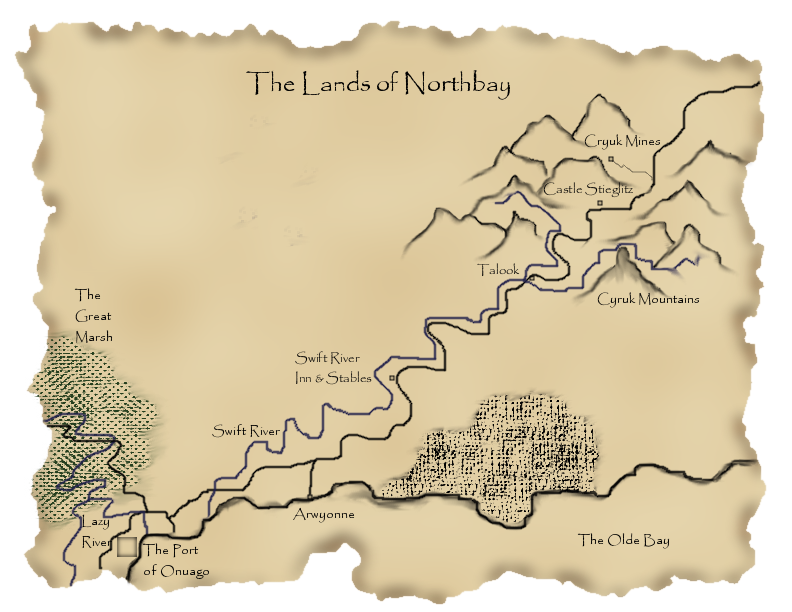 The Lands of Northbay area covers the stretch of land beginning from the Olde Bay and leading north to the Nagy Tömeg mountains, over which lies the Central Valley. On the northeast edge of the Lands of Northbay, over the Cyrűk Mountains we find the rough fishing towns of the Jæruel a merchant coalition, which to the north begin the Fjordlands, the first part of the Northlands. On the west end of the lands of Northbay past the Great Marsh lies Elsemere Wood, a forest which is mostly pristine, but in recent years has grown partially corrupt on its southeast side.
The Northlands do not have a central government; Onuago and Elsemere are too much on the decline, and the local robber baron Baron von Stieglitz has even disappeared from the public eye. The towns of the Jæruel are the best hope for this region.
Notable locations:
Towns:
* The Port of Onuago – colonial port town which has seen hard times
* Elsemere – Old logging town also on the decline
* Talook – Hamlet on the road through the Cyrűk Mountains and Castle von Stieglitz
* The towns of Jæruel:
– Tannen – capital of Jæruel – bustling port town – what Onuago was built after
– Flego – fishing village
– Uppwint – named for the strong winds that bring fog and quick shifts in the weather to this quaint fishing village
– Trover – fishing town
– Alabaster – inland named for the stone mined from its cliffs
– Arwyonne – abandoned fishing town ten miles east of Onuago
Rivers:
* Lazy River – the source has never been found somewhere within the Elsemere Mountains, passing through Elsemere Wood where it makes its way lazily through the Great Marsh to Onuago where it is channeled around the town and out to the Olde Bay. This river has been known to change course many times over the years, leaving traces of past flows as it does.
* Swift River – passes swiftly, hence the name, out of the Cyrűk Mountains, past Talook, depositing into the Olde Bay a few miles east of Onuago.
Other Geographic Features:
* The Great Marsh – a large, mostly unexplored marsh that occupies most of the land from Elsemere to Onuago.
* Goduanil – bleak moors where the sky is always overcast, which end in cliffs that overlook the Olde Bay in the center of its north shore.
* The Great Elsemere Wood – large forest, mostly unexplored by humans. The upper two-thirds is pristine forest, but the lower third has been corrupted by a tainted cult working out of the Shada Monastery in a clearing in the forest.
* Cyrűk Mountains – these begin as rocky hills and quickly become treacherous crags. The safest route through the mountains follows the road. In winter, this pass is completely impassable.
Posted in Region and tagged Horror of the Old Ones, Location by Stephen Hilderbrand with no comments yet.
Dz’ata Möschu warrior
Presented below is a first level warrior Dz’ata Möschu.
Dz’ata Möschu CR 2
warrior 1
LE Size Medium monstrous humanoid (earth)
Init: +2 Senses: Listen +2, Spot +2
Languages: some common, Dz’ata Möschu
AC: 21 (+4 natural armor, +2 dexterity, +5 armor bonus) touch 12, flatfooted 19
HP: 7 (HD 1d8+3)
Fort: +5 Ref: +2 Will: +0
MV: 20 ft, fly 30 feet (average)
Attack: +5 overclaw guantlet 1d6 + 3 or +4 longspear 1d8 + 4 or +3 javelin 1d6 + 3
Space / Reach: 5 ft. / 5 ft. (10 ft. with longspear)
Base Attack: +1 Grapple: +4
Abilities Str 16 Dex 14 Con 17 Int 8 Wis 11 Cha 7
SQ: Damage reduction 5/magic
SA: freeze
Feats: alertness
Skills: Climb +7, listen +2, spot +2
Posessions: chain mail armor, overclaw guantlet, 3 javelins and longspear.
Posted in 3rd edition Dungeons & Dragons / d20 fantasy / Pathfinder, Creature and tagged Dz'ata Möschu by Adam A. Thompson with no comments yet.
Overclaw Gauntlet
Used by the Dz’ata Möschu, generally as an off-hand weapon, the overclaw gauntlet is a full hand metal glove. The final portion of the fingers taper into 3 inch spikes, which taper to sharpened blades along the inside.
In battle the Dz’ata Möschu will often use them to assist in disarming their foes: grabbing their blades as they are swung and wresting them from their opponents.
An overclaw gauntlet forged for a medium-sized hand deals 1d6 points of damage and threatens a critical on a roll of 20. It is considered a light weapon.
Creatures with a natural claw attack can treat the gauntlet as a natural weapon for all effects related to off-hand weapons, the multiattack feat, etc.
Posted in Uncategorized and tagged Dz'ata Möschu, mundane weapon by Adam A. Thompson with no comments yet.
Dz’ata Möschu – the sleepless killers
The product of a mystical breeding program combining diabolic bloodlines with the kingdom’s finest soldiers, the Dz’ata Möschu were originally created by an ancient race to serve as soldiers and guards. When that race was destroyed the Dzta Möschu survived and became the dominant culture in the blasted region that remained. They occupy the mountainous wastelands in the northern central region of the middle kingdoms.
Their history lost in the mists of time, the Dz’ata Möschu are now considered little more than horrible monsters by the people of the middle kingdoms, and little is known of their culture. They have retained their warlike nature, and so most encounters with them come to violence. As a society, they are extremely lawful and somewhat evil. Individuals tend to match this. The only peaceful relations they have are by ancient tradition with the small nests of Kenku that also occupy the region.
Physically very similar to gargoyles, these people have extremely tough, stony skin, powerful wings, horns, claws and tails.
Dz’ata Möschu characters possess the following racial traits.
+2 Strength, +2 Dexterity, +4 Constitution, -2 Inteligence, -2 Charisma.
Medium size.
A Dz’ata Möschu’s base land speed is 30 feet. It also has a fly speed of 40 feet (average).
Darkvision out to 60 feet.
A Dz’ata Möschu has a +2 racial bonus on Hide, Listen, and Spot checks, and an additional +8 bonus on Hide checks when it is concealed against a background of stone.
+4 natural armor bonus.
Special Qualities (see above): Damage reduction 5/magic, freeze.
Automatic Languages: Möschu.
Bonus Languages: Auran, Dwarven, Elven, Gnome, Halfling, Giant, Terran or Common.
Favored Class: Fighter.
Level adjustment +2.
Posted in Creature and tagged Dz'ata Möschu, monstrous humanoid, race or culture by Adam A. Thompson with no comments yet.
Fireflyer in a Jar
These rare and strange items amount to a fireflyer literally magically trapped in a jar. The most common fireflyer in a jar is one that produces light. In certain magical realms, such as the Phyloctaete, children catch fireflyers in jars and use them to read and play by. In most locations though, they have scarcely been heard of.
The fireflyer in a jar is created when someone catches a fireflyer off its guard, trapping it in a jar. This has the effect of essentially charming the fireflyer until it it set free. If the jar is opened or smashed, the fireflyer is set free from its bonds, and so escapes into the wild and will act accordingly, possibly even attacking whoever sets them free.
Cost: depends on the spell level of the fireflyer, increasing roughly exponentially starting at 500gp (lvl2 – 1000gp, 3 – 2000gp, 4 – 4000gp, etc.) Though, these costs are much less in regions of high magic.
Posted in Creature, Magic Item and tagged construct, scroll by Stephen Hilderbrand with no comments yet.