Issue 10 Released!
 Claw/Claw/Bite is a resource for storytellers and gamemasters to help create thrilling worlds of adventure for your players to test their mettle in. In each issue, you’ll find new characters, creatures, magic items, encounters, and locations for use in your campaigns. We also include little nuggets that will enrich your world with cool details and intriguing features.
Our goal is to be a “one-stop shop” for you, the gamemaster. With little or no tweaking on your part, you will be able to drop any game element from Claw/Claw/Bite into your adventure setting and run it how you see fit. All of our creations are designed for d20 fantasy rules. And of course, all of our everything is carefully reviewed and balanced to fit into your game without disrupting your play balance.
This issue of Claw/Claw/Bite includes
* Five new creatures
* A new campaign location — the town of Junction
* Six new weapons, magic items, and special materials
* Three new spells
* Twelve new NPCs, including the cadre of heroes at 5th level
* One new race
* A new feat
Find the issue at rpgnow, or if you act now, you can find a copy for free here.
Posted in Uncategorized and tagged CCB issue by Stephen Hilderbrand with no comments yet.
Birdswarm
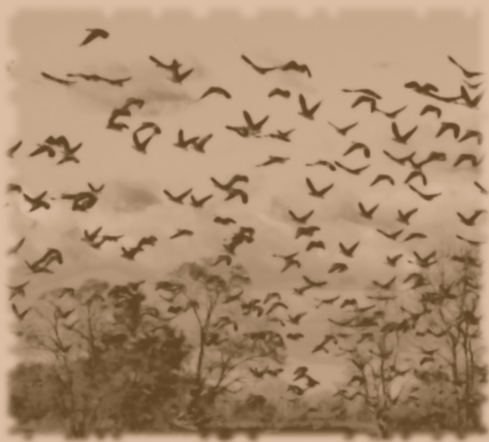 Hundreds of birds of all types gather in a cloud above.
Birdswarm
Tiny Animal (Swarm)
Hit Dice: 3d8 (12 hit points)
Initiative: +1 (Dex)
Speed: 10 ft, Fly 60 ft (average)
Armor Class: 13 (+2 size, +1 Dex)
Single Attack: swarm (1d4)
Full Attack: swarm (1d4)
Space/Reach: 10 ft/0 ft
Special Attacks: Fly-by-attack
Special Qualities: None
Saves: Fort +x, Ref +x, Will +x
Abilities: Str 1, Dex 13, Con 10, Int 2, Wis 14, Cha 6
Skills: Listen +6 (2), Spot +9 (5)
Feats: Alertness, Weapon Finesse
Climate/Terrain: Temperate/Any (including urban)
Organization: Flock (1-4 swarms)
Challenge Rating: 2
Treasure: Half standard (very small items only)
Alignment: Always Neutral
Advancement: –
COMBAT
A birdswarm does not always act as a coherent unit. Many birds will attack, while others will simply squawk at their prey. They are treacherous in that they are so unpredictable, often going from harmless to harmful in a single round. Because of this, unless characters watch them closely, birdswarms will often surprise them when they attack.
Distraction (Ex): Any living creature that begins its turn with a swarm in its square must succeed on a DC 12 Fortitude save or be confused for 1 round. The save DC is Constitution-based.
Fly-by-attack (Ex): A birdswarm can attack prey and keep moving in the same round.
Posted in Creature and tagged animal, bird, flying, swarm by Stephen Hilderbrand with no comments yet.
Locked in a Place Where No One Goes

First of all, Happy New Year, everyone! Hope you all have a safe and fun holiday, and many happy returns!
So, I ran this little adventure on Sunday for my players in the “Return to the Temple of Elemental Evil” game I’ve been running. For those who haven’t played that colossus of an adventure, near the end the players have a chance to draw from a Deck of Many Things. Almost immediately, two of the party members drew the Donjon and Void cards. I was afraid for a second that it was going to turn into a total party kill. Luckily the cleric and druid had some restraint drawing cards and only got the enmity of a powerful outsider and -1 to all their saves for the rest of their lives. All of it made me think the deck of many things is secretly the most effective trap ever created.
So, in an attempt to let the party re-unite and finish the adventure I whipped this side adventure up. It’s a one-session mini-adventure, written for 12th level characters, in which some party members are escaping from hell and some are coming to their rescue. The encounters are planned for a half-size party (2 characters in each encounter). See the footnote for hints on adapting the adventure for higher or lower level parties.
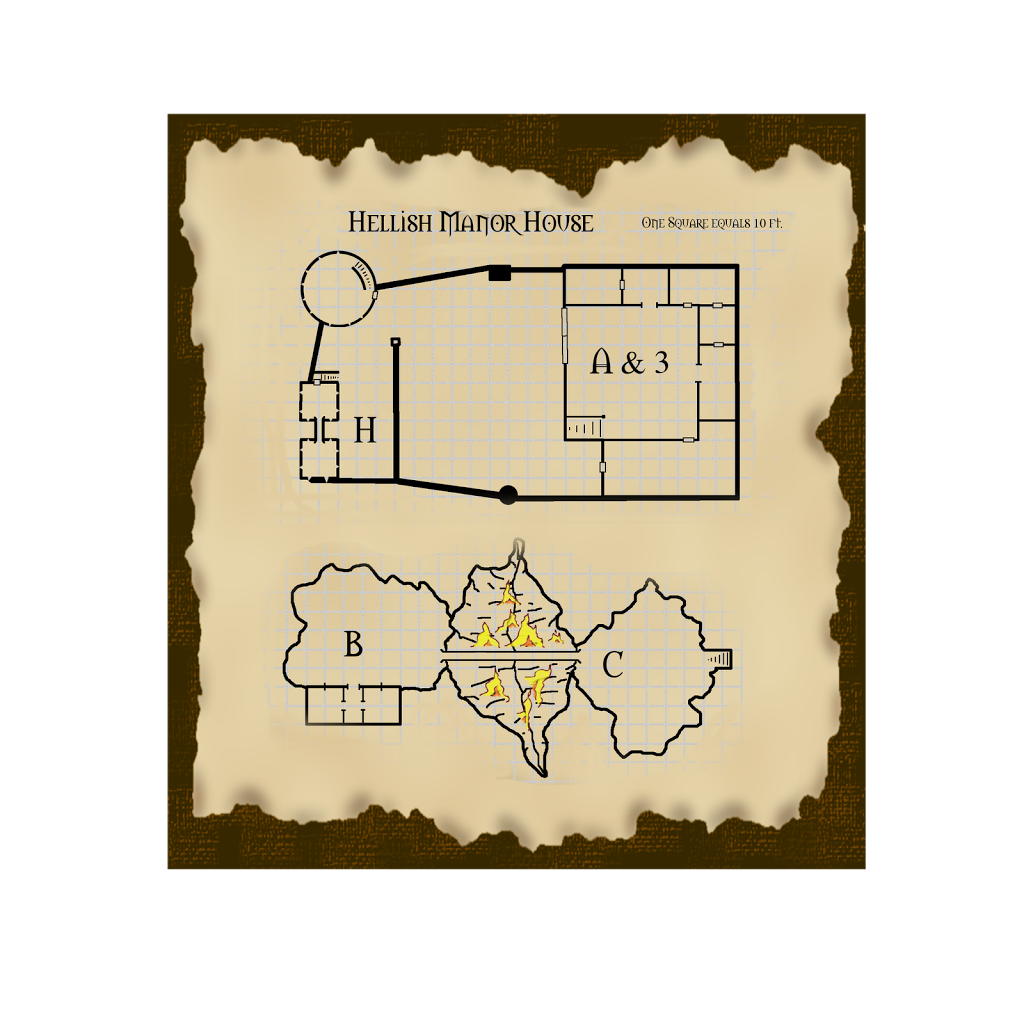
Setting: The adventure takes place in small fortified manor house on the first plane of hell. The manor is one of the domiciles of Vivarea, a powerful succubus, who has seduced, hired, and subjugated these devils to maintain her hidden villa. The surrounding region is a blasted shale landscape filled with pits of fire and twisted woods where condemned souls writhe in anguish.
Adventure Hooks: This adventure can easily be adapted to involve the rescue of an important NPC or a needed item from the dungeons beneath the manor. As a straightforward dungeon delve with a united party it would be an appropriate adventure for a full party of 8th – 10th level adventurers.
To begin the adventure, simply have the characters find a few magically trapped item that have Azeroth’s Snare, a spell similar to trap the soul, cast upon them. These items can be anything that the players would want, such as apparently enchanted magic items. The items in question will have been previously prepared by Azeroth, their trapped nature disguised (maybe via nistul’s magic aura), and perhaps had an attraction spell cast upon them to lure in the intended victims.
Trap: hell’s lure CR 10; magic device; visual trigger (true seeing); single use; triggers when touched; spell effect (Azeroth’s Snare, 17th-level wizard, teleported, without their equipment, to a magic trap at location of caster’s choosing, DC 30 Will save negates); Search DC 34; Disable Device DC 34.
Background: The outre story of how my players pissed off a succubus while raiding the Temple of All Consumption… will probably not make the pages of Claw / Claw / Bite ! Email me if you’re curious.
Running the Adventure: In order that the halves of the split-up party don’t get too bored, and also to increase the tension and build to the final encounter, the encounters should be run in this order:
1) The prisoners are captured.
2) The rescuers find out where they are being held, travel to hell, fight the hellcat encounter.
3) The prisoners slip out of their cell and escape the prison area.
4) The rescuers get to the manor and begin fighting the guards.
5) The prisoners fight their way over the bridge, past the hellhound.
6) The rescuers finish their fight against the guards.
7) The prisoners travel through the living areas up to the entrance to the main hall.
8) The rescuers start fighting the succubus; the prisoners join in after d2 rounds.
Encounters
1) Encounters for the Prisoners
A – The Devil Mocks Their Every Step (CR 23)
This encounter explains the character’s capture: the succubus has contracted with a powerful daemon, named Azeroth, to capture the characters for her, and here she gloats over her success.
Area Description:
This grand hall of dark stone soars up with gothically carved pillars and arches to a high ceiling. A grand iron double door stands shut and barred, and several smaller doors and archways lead to smaller antechambers. A wide stone staircase leads down into the darkness.
You stand in a glowing magic circle in the middle of this hall. Your names are written along the border of the circle, along with many runes you cannot understand. Standing at the ready around the circle are dozens of armed devils of various types, wrapped in hooked chains, bearded with cruel-looking axes, their melted bodies pouring out in globs from their chainmail.
There is an incredibly beautiful woman here, dressed in revealing silk robes and adorned with gem-dripping jewelery of all types. A large pair of leathery wings are folded at her back. She turns and thanks a tall, robed figure, who holds a crystal-topped staff, and who’s hood hides in shadow a skeletal dog’s head with glowing red eyes. She then addresses you, saying: “Your interference in my families affairs in the mortal world are at an end! Now I will pay you back for my daughter’s humiliation! Oh the tortures of the damned lie in wait for you, you wretched things.”
The robed figure’s fanged, skeletal mouth creaks open and issues forth a single magic word that knocks you to the ground, stunning you. A horde of horrid, melted looking humanoids in mail surge forward and clap you in irons, then drag you, in chains, to dungeons below.
Creatures: The house’s entire contingent of devils is here at this encounter, in case the characters get out of hand. In addition to Vivarea and Asteroth, there is a chain devil, a bearded devil, and a dozen lemurian footmen. Asteroth, a 17th level wizard, has been paid be Vivarea to capture the player’s characters, and will use whatever spells he must to subdue the party if the resist their parade to the cells below, such as or power word stun or dominate monster.
B- Escape! (EL 6)
In this encounter, the prisoners must trick or fight their way out of their cell and the underground prison / torture area where they are being held. They must overcome or evade their guards and the magical ward sealing them in.
Area Description:
This small cell’s walls and ceiling are made from large blocks of stone. Through an open archway, its stones covered in strange runes, lies a short hallway and more cells. A small window, filled with thick iron bars, looks out into a large cavern. There, in the dull red glow from distant flames, several racks, iron maidens, braziers with hot coals, and other torture implements are being used by a scaly, bearded devil and several horrible, melted-looking guards. The screams of their victims echo back to you.
A DC 10 search check will reveal that the other cells in the hallway have only a single rune carved on the outward facing side.
Creatures: One bearded devil and three lemurian footmen work here tormenting a few anguished damned souls. They keep an eye on the characters, but are busy at their work and take 10s on their spot and listen checks. The bearded devil leaves occasionally, providing an opportunity to try to somehow trick the footmen into releasing the prisoners.
Bearded Devil: HP: 45
Lemurian Footmen (see below): HP: 10, 7, 10
Tactics: If taunted or otherwise engaged these torturers may come to the cells and perhaps stab at the prisoners through the arches (which are warded one-way). When the prisoners escape the guards will rush them and attack with their weapons.
Trap: Lightning ward on cell entrance: This ward prevents anyone from exiting the cell. Anyone trying to pass under the arch will cause the infernal runes carved across its face to flash. The creature will suffer 2d6 points of electricity damage and be thrown back. To pass through this trap, it must be dispelled (8th level caster), disabled by covering the runes (DC 29 Disable Device check), or one can push through it with a Strength check (DC 25), which also causes 4d6 points of electricity damage. From the outside, the ward can be suspended by covering the single rune carved on that side of the arch.
CR 5; spell; spell trigger; automatic reset; spell effect (shocking grasp, 8th-level sorcerer, 2d6 electricity, no save); Search DC 29; Disable Device DC 29.
Treasure: 3 suits of chainmail, 3 spears, a glaive and a shortsword from bearded devil. Also, weapons can be improvised from torture implements.
C – The Dogs of Doom (EL 8 + 10% xp bonus)
Here, the escapees must bypass tricky spot with a hell hound guard on a narrow bridge over a pit of lava and fire.
Area Description:
Here, a narrow bridge of stone stretches across a deep chasm, filled with molten rock and towering tongues of flame. On the far side a smaller cavern is empty, save for stone stairs leading upwards.
Creatures: 1 nessian hell hound without barding lies in wait here.
Nessian Hell Hound: AC:18 HP: 111
Tactics: The hell hound, with a hide of +17, it will stalk across the bridge and try to attack anyone crossing with surprise. It will probably open up with it’s breath weapon if it’s opponents are clustered up, otherwise it will bite.
D – The Halls of the Damned
This level of the mansion consists of several underground hallways with small suites and rooms attached. These rooms include the quarters of the chain devil and the bearded devil, as well as the suite Viveria uses when she stays here. If searched, those rooms yield the treasures below, each secured with it’s own trap. The majority of the rooms, however, are empty.
Bearded Devil’s chambers
description etc
Trap:
Treasure: 57pp 70gp 19cp, and a small masterwork heavy crossbow.
Chain devil’s chambers
description etc
Trap:
Treasure: 3 platinum coins, an arcane scroll containing: knock (lvl 2, cast 3), ray of enfeeblement (lvl 1, cast 1), and cat’s grace (lvl 2, cast 3), an arcane scroll containing: shocking grasp (lvl 1, cast 1), magic circle against evil (lvl 3, cast 5), and an arcane scroll containing: command undead (lvl 2, cast 3).
Viveria’s chambers
description etc
Trap:
Treasure: 4,785gp 4sp 1cp, a gold dragon comb with red garnet eye worth 1.000 gold, a silver chalice with lapis lazuli gems worth 80 gold, a fire opal pendant on a fine gold chain worth 1,100 gold, a black velvet mask with numerous citrines worth 80 gold, and a divine scroll with speak with dead (lvl 3, cast 5).
2) Encounters for the Rescuers
E – Determine Location
The first step of the adventure for the rescuers is to determine where the prisoners are being kept. Options for the rescuers could include the following:
- scying or using divination such as commune or contact other plane
- examining the trapped items via analyse dweomer or identify, combined with a spellcraft check (DC 24) to determine where the trap teleported them to.
At that point, the players must travel to hell (or wherever you set the manor house) via plane shift, teleport, through planar portals, or however is appropriate for the situation.
F – The Damned
Here the players pass through a small woods, where damed souls, in the form of trees, suffer. These petitioners are helpless, harmless, and horrifying.
Area Description:
The players enter a thicket of uncanny trees. The tree barks have faces etched into them. Upon closer examination, the wood of the trees is squirming with maggots, ants and spiders burrowing in and feasting on their bodies. They stir, and a cacophony of laments soon fills the air as the trees mutter and scream and cry and rant against the crimes that damned them in their mortal lives.
G – Hellcats (EL 9)
Here, a few examples of hell’s native fauna attempt to predate the rescuers.
Area Description:
The dessicated landscape is eerily quiet here. Loose shale crunches underfoot. Everything is gray: the sky, the ground, the few skeletal trees that occupy the landscape–all sucked dry of color. A faint smell of rotten flesh permeates the air.
Creatures: 2 hellcats HP: 54, 69
Tactics: Listen checks against the hellcat’s move silently +20 may be the party’s only warning before they are attacked. Invisible, these hellcats will pounce upon the rescuers and fight until brought to less than 20 hit points, at which time they will flee.
H – Legions of Hellions (EL 10)
Here the rescuers must fight waves of guards to enter the manor.
Area Description:
Glistening walls of dark grey stone rise to protect the villa. Near the top, the crenelated walls slope inward slightly, perhaps to provide some cover from aerial attacks. Directly ahead of the players stands the black ironwood gates. Lemurian footmen stalk among the battlements. Though these Lemurians have a modicum of intellect, they still behave with nervous tics and gibber to themselves about their fiendish thoughts.
Creatures: There are several groups of footmen through the compound, and as the party fights their way in they should encounter several waves of the footmen, and then finally the chain devil, in the locations listed below. All the lemurian footmen have HP:9.
6 lemurian footmen guarding the gate
2 lemurian footmen reinforce right away from the gate towers
4 lemurian footmen from the circular tower as the players pass it
4 lemurian footmen are stationed in the courtyard
4 lemurian footmen reinforce from the kennels
4 lemurian footmen wait at the house entrance with the chain devil (HP: 55)
Tactics: The footmen are quite stupid, and will simply charge the players with their spears. If the end up surrounding a player or two, they may try to grapple them and bear them down under their numbers. If the footmen are slowing the rescuers, the chain devil may try to disarm them, otherwise he simply attacks. All fight to the death.
3) Encounter for the Party Reunited (EL 14)
In this encounter the characters all confront the Succubus Boss in the middle of the lair – in the main hall of the manor. The encounter should start with the rescuers coming into the hall, and the escapees should join the encounter after a round or two from the stairs below.
Area Description:
This grand hall of dark stone soars up with gothically carved pillars and arches to a high ceiling. A grand iron double door gives access to the courtyard beyond, and several smaller doors and archways lead to smaller antechambers. A wide stone staircase leads down into the darkness.
Creatures: Here Vivarea will make a final stand against the party. Every round or two a pair of lemurian footmen will join the fray, for a total of six.
Vivirith succubus sorcerer 8 (see below)
6 lemurian footmen: HP 9 each
Tactics: The succubus will begin by casting a hot fire shield, and then retreating from the party, using her greater teleport if necessary, and hurling fireballs and lightning bolts while the Lemurian Footmen harass the party. If she is somehow cornered, she will cast shield and vympyric touch. If seriously hurt she will attempt to teleport to safety, to plot against the party for another day.
Creatures
Lemurian footman (CR 1)
Lawful Evil Medium Outsider (Evil, Extraplanar, Lawful)
Environment: A lawful evil-aligned plane
Organization: Solitary, pair, gang (3-5), swarm (6-15), or mob (10-40)
Initiative: +0
Armor Class: 19 (+5 armor, +4 natural), touch 10, flat-footed 19
Hit Dice: 2d8 (9 hp)
Saves: Fort +3, Ref +3, Will +3
Speed: 15 ft. (3 squares)
Attack: Claw +2 (1d4) or spear +2 (1d8)
Full Attack: 2 claws +2 (1d4) or spear +2 (1d8)
Base Attack/Grapple: +2/+2
Space/Reach: 5 ft./5 ft.
Special Qualities: Damage reduction 5/good or silver, darkvision 60 ft., immunity to fire and poison, mindless, resistance to acid 10 and cold 10, see in darkness
Abilities: Str 10, Dex 10, Con 10, Int 5, Wis 11, Cha 5
Possessions: chain mail, spear
A lemure is about 5 feet tall and weighs about 100 pounds.
Lemures are typically mindless, but these souls have clawed their way up through the ranks of devils a half-rung, and have gained simple minds.
Combat
Lemurian footmen are simple combatants, lurching forward and attacking with their claws or whatever weapons they may have been given.
A lemure’s natural weapons, as well as any weapons it wields, are treated as evil-aligned and lawful-aligned for the purpose of overcoming damage reduction.
Vivarea, Succubus Sorcerer (CR 14)
Chaotic Evil Medium Outsider (Chaotic, Extraplanar, Evil), Sorcerer 8
Initiative: +1
Armor Class: 24 * (+1 Dex, +9 natural, +4 armor), touch 11, flat-footed 19
Hit Dice: 6d8 + 8d4 + 14 (65 hp)
Saves: Fort +8, Ref +8, Will +13
* includes Mage Armor
Speed: 30 ft. (6 squares), fly 50 ft. (average)
Attack: Claw +11 melee (1d6+1)
Full Attack: 2 claws +11 melee (1d6+1)
Space/Reach: 5 ft./5 ft.
Base Attack/Grapple: +10/+11
Feats: Dodge, Mobility, Persuasive, Still Spell, Spell Focus (Enchantment)
Special Attacks: Energy drain, spell-like abilities, summon demon
Special Qualities: Damage reduction 10/cold iron or good, darkvision 60 ft., immunity to electricity and poison, resistance to acid 10, cold 10, and fire 10, spell resistance 18, telepathy 100 ft., tongues
Abilities: Str 13, Dex 13, Con 13, Int 16, Wis 14, Cha 28
Skills: Bluff +28, Concentration +18, Craft (jewelery) +7, Craft (traps) +7, Diplomacy +13, Disguise +17* (+19 acting), Escape Artist +10, Hide +10, Intimidate +20, Knowledge (arcana) +12, (the planes) +11, Listen +19, Move Silently +10, Search +12, Spellcraft +11, Spot +19, Survival +2 (+4 following tracks), Use Rope +1 (+3 with bindings)
Spells Available: (DC 19 + spell level, +1 for enchantment)
1st (9): mage armor, shield, magic missile,
2nd (8): scorching ray, invisibility, mirror image,
3rd (7): fireball, lightning bolt, vampyric touch
4th (5): fire shield
Adapting the Adventure
To adapt this adventure for parties of higher or lower level, not much needs to be changed. Add or subtract levels of sorcerer from the succubus so that she is 2 CR higher then the average party level.
All area descriptions copyright 2007 Unicorn Rampant Publishing
Posted in Encounter and tagged Location by Adam A. Thompson with no comments yet.
Variant Rules for Spellcasters: Mana
This variant rule changes the way spellcasters prepare and cast spells. Overall, it increases spellcaster’s versatility and power. The main reason I came up with this system is to make it more fun for my spellcasting players, and to help keep the game going. Under these rules, they are less likely to end up out of useful spells, bored, firing crossbow bolts, and wanting to stop adventuring to rest.
Under these variant rules, instead of memorizing and casting a set number of spells each day, spellcasters have a new attribute called mana, a pool of magical power that they use to cast spells. See the charts below for available mana at each level, the highest level spell available, and bonus mana for high ability scores.
Mana is used to spontaneously cast spells from the spellcaster’s list of known spells. The number of points of mana expended in the casting of a spell cast is equal to the spell level (0th level spells cost no mana points). Metamagic spells are all now cast spontaneously, including the quickened spells, and raise the mana spent according to their level adjustment. This adjusted level cannot exceed the Highest Level Spell for that character’s level (see chart below). For example, a 10th level wizard could cast a quickened shield spell, and it would cost her 5 mana points to do so. They could not, however cast a quickened dimension door until they reached 15th level.
Mana is regained daily differently for each class, in the same way that they previously refreshed their daily spells: clerics pray to their deity at a certain time of day, wizards consult their spellbooks, and other spellcasters merely rest.
Game Balance Issues: at high levels, spellcasters can cast their most powerful (and often, very deadly) spells over and over again.
Re-Balancing Ideas:
“You took too much”: if a character casts high level spells for three rounds in a row, they have to make a will save (or an ability level check, like an intelligence check for wizards) equal to how many points of mana they spent in the last three rounds. If they fail the check they lose the spell and become dazed for 1 round.
“less magic”: cut mana gain 1/2 or 2/3 for levels above 7th or 10th. Dosen’t really solve the problem though.
“change defensive casting” so that a successful concentration check means you only get a +8 (or +4) AC vs attacks of opportunity.
Mana By Character Level (high magic)
|
Character Level |
Wizard or Druid Mana |
Wizard Highest Level Spell |
Cleric Mana |
Cleric Highest Level Spell |
Bard Mana |
Bard Highest Level Spell |
|---|---|---|---|---|---|---|
|
1 |
2 |
1 |
3 |
1 |
1 |
0 |
|
2 |
4 |
5 |
1 |
1** |
||
|
3 |
6 |
2 |
9 |
2 |
2 |
1 |
|
4 |
9 |
12 |
3 |
2** |
||
|
5 |
12 |
3 |
18 |
3 |
6 |
2 |
|
6 |
17 |
23 |
8 |
|||
|
7 |
22 |
4 |
32 |
4 |
8 |
3** |
|
8 |
29 |
39 |
13 |
3 |
||
|
9 |
36 |
5 |
41 |
5 |
16 |
|
|
10 |
45 |
60 |
16 |
4** |
||
|
11 |
54 |
6 |
75 |
6 |
23 |
4 |
|
12 |
65 |
86 |
26 |
|||
|
13 |
76 |
7 |
104 |
7 |
26 |
5** |
|
14 |
89 |
117 |
36 |
5 |
||
|
15 |
102 |
8 |
138 |
8 |
42 |
|
|
16 |
117 |
153 |
44 |
6** |
||
|
17 |
132 |
9 |
177 |
9 |
58 |
6 |
|
18 |
149 |
194 |
68 |
|||
|
19 |
165 |
10* |
210 |
10* |
79 |
7* |
|
20 |
182 |
227 |
85 |
* for metamagic purposes only
** assumes the bard has a high enough Charisma score to have a bonus spell of this level
Bonus Mana by Ability Score
|
Score |
Highest Level Spell at which bonus mana is Received |
||||||||
|
1st |
2nd |
3rd |
4th |
5th |
6th |
7th |
8th |
9th |
|
|
1-9 |
* |
* |
* |
* |
* |
* |
* |
* |
* |
|
10-11 |
0 |
0 |
0 |
0 |
0 |
0 |
0 |
0 |
0 |
|
12-13 |
1 |
0 |
0 |
0 |
0 |
0 |
0 |
0 |
0 |
|
14-15 |
1 |
2 |
0 |
0 |
0 |
0 |
0 |
0 |
0 |
|
16-17 |
1 |
2 |
3 |
0 |
0 |
0 |
0 |
0 |
0 |
|
18-19 |
1 |
2 |
3 |
4 |
0 |
0 |
0 |
0 |
0 |
|
20-21 |
2 |
2 |
3 |
4 |
5 |
0 |
0 |
0 |
0 |
|
22-23 |
2 |
4 |
3 |
4 |
5 |
6 |
0 |
0 |
0 |
|
24-25 |
2 |
4 |
6 |
4 |
5 |
6 |
7 |
0 |
0 |
|
26-27 |
2 |
4 |
6 |
8 |
5 |
6 |
7 |
8 |
0 |
|
28-29 |
3 |
4 |
6 |
8 |
10 |
6 |
7 |
8 |
9 |
|
30-31 |
3 |
6 |
6 |
8 |
10 |
12 |
7 |
8 |
9 |
|
32-33 |
3 |
6 |
9 |
8 |
10 |
12 |
14 |
8 |
9 |
|
34-35 |
3 |
6 |
9 |
12 |
10 |
12 |
14 |
16 |
9 |
|
36-37 |
4 |
6 |
9 |
12 |
15 |
12 |
14 |
16 |
18 |
|
38-39 |
4 |
8 |
9 |
12 |
15 |
18 |
14 |
16 |
18 |
|
40-41 |
4 |
8 |
12 |
12 |
15 |
18 |
21 |
16 |
18 |
|
42-43 |
4 |
8 |
12 |
16 |
15 |
18 |
21 |
24 |
18 |
|
44-45 |
5 |
8 |
12 |
16 |
20 |
18 |
21 |
24 |
27 |
|
Etc… |
Posted in Variant Rules and tagged Spellcasting by Adam A. Thompson with no comments yet.
Issue 4 Rereleased!
 Merry non-orthodox Christmas, everybody.
We’ve been busy typesetting old issues with our latest template, and here is the first reprint, available at rpgnow.
Act fast, click here, and get the issue for free! It pays to pay attention to our blog.
Stay tuned for more reprints of old issues. If you bought the original printing, upgrade to the new printings for free by sending an email to ccb@unicornrampant.com.
Here’s the blurb for the issue:
Claw/Claw/Bite is a resource for storytellers and gamemasters to help create thrilling worlds of adventure for your players to test their mettle in. In each issue, you’ll find new characters, creatures, magic items, encounters, and locations for use in your campaigns. We also include little nuggets that will enrich your world with cool details and intriguing features.
Our goal is to be a “one-stop shop” for you, the gamemaster. With little or no tweaking on your part, you will be able to drop any game element from Claw/Claw/Bite into your adventure setting and run it how you see fit. All of our creations are designed for d20 fantasy rules. And of course, all of our everything is carefully reviewed and balanced to fit into your game without disrupting your play balance.
This issue of Claw/Claw/Bite includes
* Three new campaign locations
* Four new NPCs
* Three new creatures
* Three new magic items
Posted in news and tagged CCB issue by Stephen Hilderbrand with no comments yet.
Asteroth’s Snare
Conjuration (Summoning)
Level: Sor/Wiz 9
Components: V, S, M, (F); see text
Casting Time: 1 standard action or see text
Range: Close (25 ft. + 5 ft./2 levels)
Target: One creature
Duration: Permanent; see text
Saving Throw: See text
Spell Resistance: Yes; see text
This spell is a more powerful and versatile version of Trap the Soul.
Asteroth’s Snare transports a living creature into a specially prepared magic circle, which can be at any distance from the target, even on another plane. The magic circle holds the trapped entity indefinitely or until the circle is broken or the caster releases the victim. If the trapped creature is a powerful creature from another plane it can be required to perform a service immediately upon being freed. Otherwise, the creature can go free once the circle imprisoning it is broken or it is otherwise freed.
Depending on the version selected, the spell can be triggered in one of two ways.
Spell Completion
First, the spell can be completed by speaking its final word as a standard action as if you were casting a regular spell at the subject. This allows spell resistance (if any) and a Will save to avoid the effect. If the creature’s name is spoken as well, any spell resistance is ignored and the save DC increases by 2. If the save or spell resistance is successful, magic circle is destroyed.
Trigger Object
The second method is far more insidious, for it tricks the subject into accepting a trigger object inscribed with the final spell word, automatically placing the creature’s soul in the trap. To use this method, both the creature’s name and the trigger word must be inscribed on the trigger object when the magic circle is drawn. A sympathy spell can also be placed on the trigger object. As soon as the subject picks up or accepts the trigger object, its is automatically transferred to the magic circle without the benefit of spell resistance or a save.
Material Component
Before the actual casting of Asteroth’s Snare, you must prepare a special magic circle, similar to the one used for planar binding, the creation of which costs at least 1,000 gp value for every Hit Die possessed by the creature to be trapped. If the circle is not valuable enough, it blows away when the entrapment is attempted. (While creatures have no concept of level or Hit Dice as such, the value of the gem needed to trap an individual can be researched. Remember that this value can change over time as creatures gain more Hit Dice.)
Focus (Trigger Object Only)
If the trigger object method is used, a special trigger object, prepared as described above, is needed.
Posted in Uncategorized and tagged sorcerer / wizard spell, sorcerer / wizard spell level 9 by Adam A. Thompson with no comments yet.
Junction
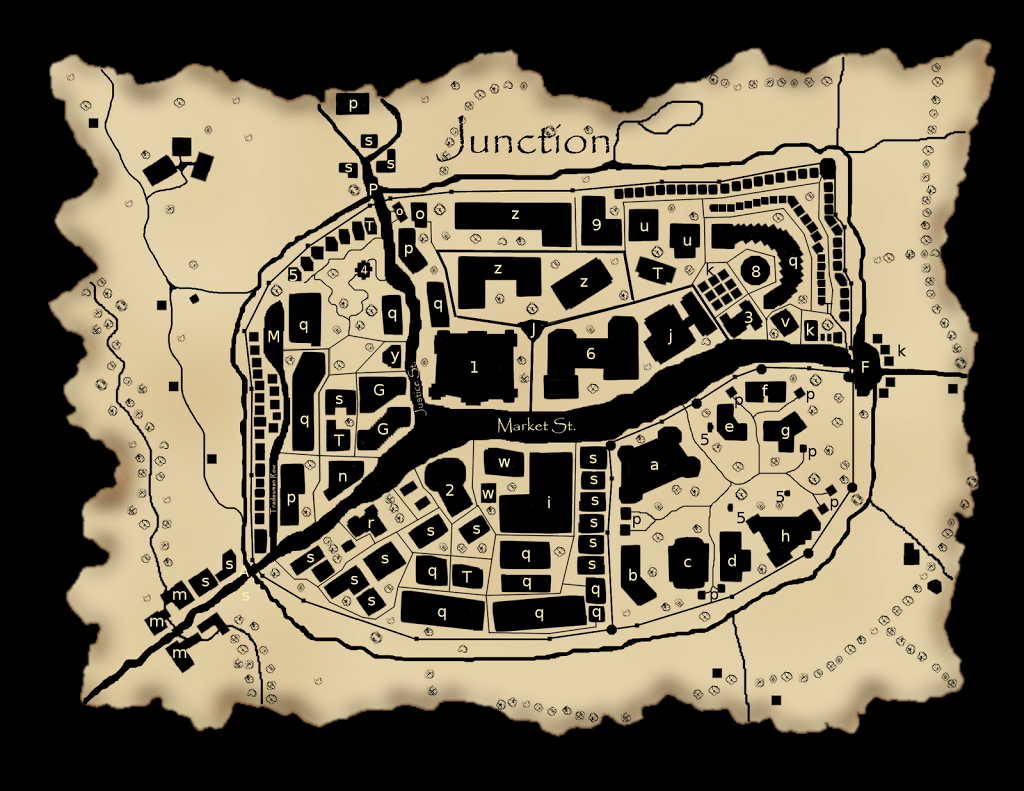 Medium Town: Conventional; AL LN; 10,000 gp limit; Assets 2,000,000 gp; Population 3,000; Mixed (95% human, 2% halfling, 1% elf, 1% gnome, 1% dwarf).
Junction lies along the road from the Jæruel to the Cyrűk Mountains and into Northbay. The walled town has 3,000 inhabitants, many of whom moved to the town relatively recently. The town is still expanding along with its walls, so there is much housing still under construction along the edges of town. Junction enjoys a relatively high standard of living, as there is much abundant produce and rolling fields for cattle to graze upon in the area, and nice stone that is mined in Alabaster to the north. Fish stream in from the coastal town of Uppwint the southeast.
Junction serves as the main hub of the trade route from the Cyrűk Mountains to the Jæruel, and part of its wealth has developed through the high tariffs imposed by the local Jæruel officials. These official live in the southeast of town in a gated community.
Architecture
The buildings in Junction are mostly made of wood. Much of the mansions in the wealthy quarter have stone foundations and parts of walls made of stone. The city hall and older buildings along Market St. are made of stone. Parts of the city walls are stone — 5 feet every 10 foot section of wall. Much of this stone was brought in from Alabaster to the north, though some was quarried a few miles northeast of Junction.
Layout
Market Street runs east-west in the center of the walled city. Local merchants without a permanent shop set up each morning along this thoroughfare which is much wider than the streets in the rest of the town. Guard towers are prominent features in this town of local militia. All the troops report to the Jæruel who very clearly run the town.
Justice Street runs north-south from Market St. to the North Gate. The Temple of Justice sits at the corner of Justice and Market. Thieves are usually sent to the temple to repent before being tried.
The southeast quadrant of the town is the wealthy residential area known as Sunnlunt. Eight large mansions occupy the space, each with its own stables. Shrines line the main roads into the quadrant, filled with scenes painted from humanized images of Garl Glittergold.
The northeast is home to the arena. Many people live in this part of town, including warriors and small-time merchants who sell wares in and around the arena during events. There is also a temple to the god of war along Market St. To the east end of Market St., East Gate overlooks Fish Square, where the fresh catch is brought in from Uppwint and other, smaller fishing villages along the coast.
The north central part of town is known as the Jæruel district. This is where the city hall, the temple of justice and the Jæruel administrative buildings can be found. The quarters in this part of town are equivalent to decent merchant homes. Guards stationed at the North Gate keep watch over Pork Square, home of the famous pig auctions.
The southwest district is known as the Merchant quarter, named because it is home to many successful merchants, as well as a temple and the Climbing Rose Inn. The homes are fairly well cared for and there is only moderate crime. The West Gate overlooks Apple Square, where much produce enters the city.
If not for the troops stationed in this part of town, the northwest would perhaps be a sketchy part of town. In addition, given the walled nature of the city, crime is not as rampant as one would expect for a population of nearly 3,000, over 4,000 on the heavier trading days, and 5,000 during the first market days of the lunar cycle.
Map Key
Religious:
1 Justice Temple of Hieroneous
2 Peace Temple of Fharlanghn
3 War Temple to Kord
4 Druid Temple to Ehlonna
5 Various Shrines
Civic:
6 Town Hall
7 Trade Winds Oak (south side of Town Hall)
8 Arena
9 Merchant Museum
Mansions:
a Luxord Manor
b Dwenton Manor
c Tynold Manor
d Swansyd Manor
e Jarlsbyd Manor
f Hox Manor
g Antol Manor
h Tanebrux Manor
Other:
A Apple Square
F Fish Square
G Garrisons
i Market Inn
j Jæruel
J Jæruel Square
k Kiosks
m Mills
M Mercantile Square
n Inn
o The Three ‘N’ Blankets
p Stables
P Pork Square
q Residences
r The Climbing Rose
s Shops
t Towers
T Small Taverns
u Blacksmiths
v Warrior Guild
w Mage Houses
x Training Grounds
y Magic Shop
z Jæruel Quarters
The buildings outside the town walls are barns and farmhouses. On the north end of the town are pig stalls and to the northwest is Eggelt Farms, where chickens are raised and vegetables grown.
Persona
Junction is a town of many merchants. They live decent lives selling their wares and keeping the populace well fed. Farmers come to town and sell produce most days of the week, and with the constant influx of travellers, the inns remain at least half full, and the visitors meander about the markets in the morning hours before setting off for adventure. When the weather is favorable, there is much music and dance in the streets, but when it rains, the people are glum, moping about in the taverns and waiting out the weather.
There is a slight feeling of inequity among the poorer workers in town. When the ruling Jæruel officials parade along Market St. or show themselves in the arena, the people eye them suspiciously. Foreigners are welcomed as long as they are strong warriors. The people of Junction can’t stand weakness — they’ve worked too hard to stand it.
Jæruel leaders administering Junction:
Tarrin Dwenton
Darrius Luxord
Felonious Hox
Mortimyr Swansyd
Lynus Tynold
These posts will follow.
Posted in Uncategorized and tagged Jæruel, Location, town by Stephen Hilderbrand with no comments yet.
Pakhar Madrat
Pakhar Madrat stands well over 6ft tall. His shaggy golden hair is swept into a crest down the middle of his wide head. He wears leather armor, blacker than midnight; a deep blue cloak, and finely made black leather gloves over his clawed hands. He carries upon his back a long spear trimmed in horsehair, a heavy flail, a composite longbow constructed of black wood, and 2 quivers of black arrows fletched with vulture feathers.
Pakhar Madrat CR 11
Alignment: Evil medium sized male bugbear
fighter 3, cleric 3 (domains Chaos and Evil), blackguard 4
Init: +5
Senses: Listen +5, Spot +5
Aura: Pure Evil (level of aura’s force 7, aura power Strong) and Despair (enemies within 10 feet take -2 to all saving throws)
Languages: common, goblin, orc, draconic, abyssal
AC: 19 (+4 armor, +5 dex) touch 15, flatfooted 14 with shield of faith AC 21
HP: 86(HD 6d8+7d10+30)
Fort: +15 Ref: +11 Will: +10
MV: 30 ft.
Attack: +14 longspear (1d8 +7) or +14 heavy flail (1d10 + 7 / 19-20 x 2) or +14 longbow (1d8 + 5)
Full Attack: +14 / +9 longspear, flail or longbow
Space / Reach: 5 ft. / 5 ft. (10 ft. with longspear)
Base Attack: +9 Grapple: +14
SQ: Darkvision 60 ft, scent, aura of despair, Dark blessing
SA: Sneak Attack +1d6, command undead, smite good 1/day, aura of evil, detect good, poison use
Feats: Scribe Scroll, Power Attack, Cleave, Improved Sunder, Dodge, Quick Draw, Great Cleave
Skills: Climb 7, Concentrate 10, Heal 4, Hide 15, Intimidate 8, Jump 8, Knowledge (Arcana) 4, Knowledge (Religion) 7, Knowledge (The Planes) 3, Listen 5, Move Silently 10, Profession (Mercenary) 5, Search 4, Spot 5, Swim 7
Abilities: Str 20 Dex 18 (20 gloves of dexterity) Con 16 Int 14 Wis 16 Cha 10 (12 cloak of charisma)
Cleric Spells Prepared or Available: Domains: trickery (special power), evil (special power)
0th (4): resistance, detect magic, guidance, cure minor wounds
1st (3+1): bane, cure light wounds, shield of faith, protection from good*
2nd (2+1): aid, cure moderate wounds, invisibility*
* domain spell
Blackguard Spells Prepared:
1st (2): cause fear, magic weapon
2nd (1): death knell
Spell-Like Abilities: Detect good
Aura of Evil (Ex): The power of a blackguard’s aura of evil (see the detect evil spell) is equal to his class level plus his cleric level, if any.
Poison Use: Blackguards are skilled in the use of poison and never risk accidentally poisoning themselves when applying poison to a blade.
Dark Blessing (Su): A blackguard applies his Charisma modifier (if positive) as a bonus on all saving throws.
Bugbear characters possess the following racial traits.
* +4 Strength, +2 Dexterity, +2 Constitution, -2 Charisma.
* Medium size.
* A bugbear’s base land speed is 30 feet.
* Racial Hit Dice: A bugbear begins with three levels of humanoid, which provide 3d8 Hit Dice, a base attack bonus of +2, and base saving throw bonuses of Fort +1, Ref +3, and Will +1.
* Racial Skills: A bugbear’s humanoid levels give it skill points equal to 6 × (2 + Int modifier). Its class skills are Climb, Hide, Listen, Move Silently, Search, and Spot.
* Racial Feats: A bugbear’s humanoid levels give it two feats.
* +3 natural armor bonus.
* +4 racial bonus on Move Silently checks.
* Special Qualities: Darkvision 60 ft., scent.
* Automatic Languages: Common, Goblin. Bonus Languages: Draconic, Elven, Giant, Gnoll, Orc.
* Favored Class: Rogue.
* Level adjustment +1.
Posted in 3rd edition Dungeons & Dragons / d20 fantasy / Pathfinder, Character, Creature and tagged bugbear by Stephen Hilderbrand with no comments yet.
Undersea Armors
These armors are often worn by soldiers of the Deep Sea Gnomes, but are not uncommon among the other underwater races.
Sharkskin Armor This very tough light armor is made from the hide of the sea’s deadliest predators. Exceptionally supple and light, underwater combatants prise it for it’s unrestrictiveness. Additionally, skilled armor-crafters can fashion this armor so that the shark’s sharp scales act as armor spikes by alternating the bands of skin, causing the scales’ edges to protrude. Special oils must be used to keep the armor supple and preserve it in aquatic environments.
Armor Bonus: +3 Maximum Dex Bonus: +5 Armor Check Penalty: 0 Arcane Spell Failure Chance: 10% Speed (30ft): 20 ft. Speed (20ft): 15 ft. Weight: 15 lb. Cost: 35 gold
Sharkbone Armor About as protective and tough as a breastplate, parts of the shark’s cartalige, connected by sharkskin, are fashioned into a medium armor that mainly protects the torso. Skilled undersea-armorworkers can incorporate the shark’s jaws and teeth to create ridges of shark-tooth armor spikes on this armor. The cartilige of a sharkbone breastplate remains tough and supple in aquatic environments and does not impede the wearer’s movement much. However, if it is taken out of the water for more than a day or so it dries out and becomes brittle, stiff and useless as armor.
Armor Bonus: +5 Maximum Dex Bonus: +3 Armor Check Penalty: -2 Arcane Spell Failure Chance: 25% Speed (30ft): 20 ft. Speed (20ft): 15 ft. Weight: 30 lb. Cost: 300 gold
Posted in Equipment and tagged armor, emerald sea, ocean or sea by Adam A. Thompson with no comments yet.