Spear and Shield of the Heavens
“…[he] Was moving toward the shore; his ponderous shield Ethereal temper, massy, large and round, Behind him cast; the broad circumference Hung on his shoulders like the Moon, whose Orb
Through Optic Glass the TUSCAN Artist views At Ev’ning from the top of FESOLE, Or in VALDARNO, to descry new Lands, Rivers or Mountains in her spotty Globe.
His Spear, to equal which the tallest Pine Hewn on NORWEGIAN hills, to be the Mast Of some great Ammiral, were but a wand, He walkt with to support uneasie steps…”
-Milton, Paradise Lost
These items are from a scene in the adventure-in-development “The Endless Road” from Unicorn Rampant Publishing. In it the party, while attempting to escape from the abyss on foot, come upon these items.
This spear and shield were carried by a famous archon in battle into the depths of hell, where it was used to slay a terrible fiend. There, in a blasted crater, it remains, clutched in the charred dead hands of that angel, plunged into the dead heart of the demon he slew, thereby dying.
In the aeons that have followed, the abyss has recoiled from these holy items, like an irritating grain of sand lodged in the fibers of it’s being. The blasted crater formed by the balor’s death has deepened and expanded, and bebelith have spawned in the blasted, lifeless lands around it.
The spear is a +2 cold iron holy longspear for medium sized creatures, or a short spear for a creature of titanic proportions.
The shield has a faint glow and a pearly luminescence about it, and is a +2 ghost touch shield that grants cold resistance 10 to it’s bearer.
Posted in Magic Item and tagged armor, The Endless Road, weapon by Adam A. Thompson with no comments yet.
Spider Zombie
Size/Type: Large Magical Beast
Hit Dice: 5d10+15 (42 hp)
Initiative: -1
Speed: 40 ft. (8 squares), climb 20 ft.
Armor Class: 15 (-1 size, +1 Dex, +5 natural), touch 15, flat-footed 15
Base Attack/Grapple: +5/+12
Attack: Bite +7 melee (1d6+4 plus poison)
Full Attack: Bite +7 melee (1d6+4 plus poison)
Space/Reach: 10 ft./10 ft.
Special Attacks: poison
Special Qualities: Darkvision 60 ft., low-light vision, damage reduction 5/slashing, undead traits
Saves: Fort +7, Ref +7, Will +2
Abilities: Str 12, Dex 12, Con Ø, Int Ø, Wis 10, Cha 1
Skills: Climb +11, Move Silently +11, Spot +4
Feats: Toughness
Environment: Warm hills
Organization: Solitary or cluster (2-5)
Challenge Rating: 5
Treasure: None
Alignment: Always neutral evil
Advancement: 6-8 HD (Large); 9-15 HD (Huge)
Level Adjustment: —
Spider zombies were once spiders of a different (s)ilk who were slain, but never properly lain to rest. They typically become affected by their own poisons and succumb to an affliction that leaves them in limbo, where they make tasty fleshy treats for zombies, ghouls, and wights.
A typical spider zombie’s body is 8 feet long. It weighs about 700 pounds.
Spider zombies cannot speak; instead they gibber, and clip their mandibles together in a slow, haunting rhythm.
Combat
Undead spiders tend to inhabit graveyards and mausoleums. They usually spin webs that cling to the trees, where they await their prey. Indoors, they span the corners of the room, where they hide in the darkness beyond the light of a torch.
Poison (Ex): Injury, Fortitude DC 17, initial and secondary damage 1d8 Con. The save DC is Constitution-based.
Damage Reduction (Ex): A spider zombie has damage reduction 5/slashing. Spider zombies are lumbering masses of flesh.
Skills
A spider zombie has a +8 racial bonus on Climb checks and can always choose to take 10 on a Climb check, even if rushed or threatened.
Alternates:
Spider Ghoul
Spider Wight
Also creepy, usually after these beasts pass from undeadness, they become ghost spiders.
Posted in Creature and tagged undead by Stephen Hilderbrand with no comments yet.
Wyrmhole
 Size/Type: Large Outsider (Astral)
Hit Dice: 8d8 (36 hp)
Initiative: +13
Speed: Fly 40 ft.
Armor Class: 24 (-1 size, +7 Dex, +9 deflection), touch 29, flat-footed 20
Base Attack/Grapple: +6/-3
Attack: Shock +16 melee touch (2d6 electricity)
Full Attack: Shock +16 melee touch (2d6 electricity)
Space/Reach: 5 ft./5 ft.
Special Attacks: Engulf
Special Qualities: Darkvision 60 ft., immunity to magic, natural invisibility
Saves: Fort +3, Ref +12, Will +9
Abilities: Str 1, Dex 26, Con 10, Int 15, Wis 16, Cha 12
Skills: Disguise +5 (+8 acting), Intimidate +3, Listen +17, Search +14, Spot +17, Survival +3 (+5 following tracks)
Feats: Alertness, Blind-Fight, Dodge, Improved Initiative, Weapon Finesse
Environment: Temperate marshes
Organization: Solitary, pair, or string (3-4)
Challenge Rating: 6
Treasure: 1/10 coins; 50% goods; 50% items
Alignment: True Neutral
Advancement: 9-18 HD (Huge)
Level Adjustment: —
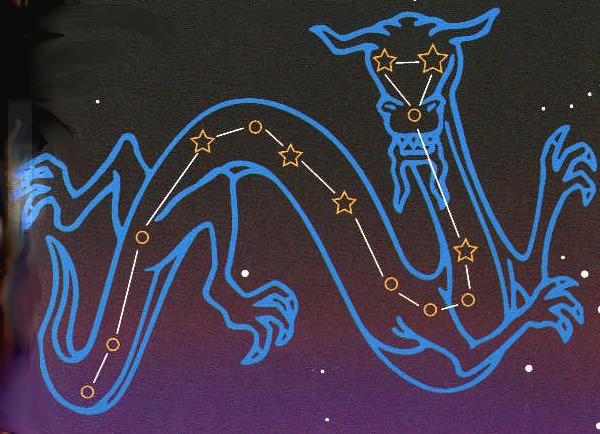
Wyrmholes are portals to other planes. They are also wandering creatures which cause trouble for wandering adventurers and creatures.
The classic wyrmhole takes victims to the astral plane. Since wyrmholes are true neutral, they really don’t want to meddle much in the affairs of anyone, but they do have this natural ability to plane shift, and they do sometimes get hungry.
Wyrmholes speak only the language of their home planes. Their only vocal apparatus are their gaping maws which resonate very quietly with various tones. A character who succeeds on a Knowledge Planes check DC 20 will be familiar with this sound, and if they listen for it, will hear a wyrmhole from 500 feet away.
Combat
Wyrmholes usually avoid combat. When they hunger, rather than hunt, they prefer to capture (gather) adventurers, luring them into their gaping maws and out into the Astral Plane. When they are forced to fight, they loose small electrical shocks, which act as melee touch attacks.
Immunity to Magic (Ex): A wyrmhole is immune to most spells or spell-like abilities that allow spell resistance, except dimensional anchor, and dismissal.
Natural Invisibility (Ex): Wyrmholes are often not visible, as they only dimly pass the light from the astral plan through their permeable membranes.
Engulf (Ex): Wyrmholes have been known to completely engulf their prey, then plane shifting, depositing them on the Astral Plane.
Spell-like Abilities: Plane Shift at will
Posted in Creature and tagged astral, outsider by Stephen Hilderbrand with no comments yet.
Sandtrap
Sandtraps sit quietly in the desert or in subterranean passages, awaiting their prey. They usually don’t attack unless their prey fall for their ambush, unless of course they are particularly hungry. Their corrosive slime allows them to eat through stone, creating the sand needed to hide within.
Huge Aberration
HD: 13d8 + 50 (120 hp)
Initiative: +10
Speed: 15 ft. (3 squares)
Armor Class: 21 (-2 size, +3 Dex, +9 natural), touch 12, flat-footed 16
Base Attack/Grapple: +4/+13
Attack: Slam +12 melee (1d6+5)
Full Attack: Slam +12 melee (1d6+5) and bite +8 melee (3d4+2)
Space/Reach: 15 ft./15 ft. (5 ft. with bite)
Special Attacks: Engulf, Corrosive slime
Special Qualities: Darkvision 60 ft.
Saves: Fort +10, Ref +7, Will +5
Abilities: Str 23, Dex 16, Con 17, Int 14, Wis 15, Cha 11
Skills: Hide +13, Listen +13, Move Silently +12, Spot +8
Feats: Alertness, Combat Reflexes, Improved Initiative
Environment: Underground
Organization: Solitary
Challenge Rating: 9
Treasure: Standard
Alignment: Usually chaotic neutral
Advancement: 14-18 HD (Colossal)
Level Adjustment: —
Engulf: Using sand-coated flaps, a sandtrap can suck a large or smaller creature in its body as a standard action. This does not provoke an attack of opportunity. If it wins a grapple check,, it gains hold of the victim, and can attack with a +4 on the attack roll.
Corrosive Slime: Per round, sandtraps deliver 2d6 acid damage, 4d6 vs. metallic creatures or objects, 8d10 vs. stone. Metallic armor and weapons become useless in their maws.
Sine they eat through stone, they are found in soily subterranean dwellings, rather than in stony passages.
Posted in Creature and tagged subterranean by Stephen Hilderbrand with no comments yet.
Staff of G’raff
The transmutation on this quarterstaff provides an additional 5′ reach, as it has been enchanted by an extend reach spell.
This staff is generally made of a rare spotted wood, part of the reason for the normal price of 15,000 gp.
Faint transmutation; Craft Rod or Staff CL5.
Legions of young mages wielded Staff of G’raffs during the MageWar waged in the Phyloctaete, as they could be easily created from wood harvested our of the Border Forest on the eastern edge of the nation. Now that so many mages have fallen, and the spotted trees of the border wood have become scarce, so too has the Staff of G’raff.
Posted in Magic Item and tagged staff by Stephen Hilderbrand with no comments yet.
Issue 9
Claw/Claw/Bite is a resource for storytellers and gamemasters to help create thrilling worlds of adventure for your players to test their mettle in. In each issue, you’ll find new characters, creatures, magic items, encounters, and locations for use in your campaigns. We also include little nuggets that will enrich your world with cool details and intriguing features.
Our goal is to be a “one-stop shop” for you, the gamemaster. With little or no tweaking on your part, you will be able to drop any game element from Claw/Claw/Bite into your adventure setting and run it how you see fit. All of our creations are designed for d20 fantasy rules. And of course, all of our everything is carefully reviewed and balanced to fit into your game without disrupting your play balance.
This issue of Claw/Claw/Bite includes
* Four new creatures, including a new True Dragon: the Deep Forest Dragon
* Several new campaign locations
* Two new encounters
* New weapons, magic items, and special materials
* Two new spells
* New NPCs: a dead king and a triumphant new wizard-king
* Two historical events
Download a preview at unicornrampant.com and the full issue at rpgnow.
And, of course, don’t forget our previous issues!
Posted in news and tagged CCB issue by Stephen Hilderbrand with no comments yet.
The Fall of Vandor’s Prominence and Rise of the Ten Princedoms
The autumn following Vandor’s death brought new peril to the land he left at death’s door. His ten princely heirs could not agree as to how they wanted to rule the land. His eldest son Hanik fell into an unknown illness, and could not keep the other brothers from squabbling over the remaining land. They argued, armwrestled, boxed, fenced, and displayed feats of archery to contend for the prize. The boys were at the edge of bringing their house down in complete war, when Djander, the trusted counsel to their father the king, suggested that they each have a turn at running their own region of the kingdom. He gave them each a year to prove their worthiness as king by ruling a single Princedom.
In the end, the islands were given self-governing status, and each son took control of one of the administrative regions of Vandor, in the hopes of proving their worth to each other and their people. This has proven a difficult challenge, as the people have begun to move away to the Republic of Esrun with its doctrine of individual freedom and merchant riches, the Kingdom of Altæa with its charismatic Queen Aeynn, and to the Phyloctæte, as it moves into a new era of promising peace under the half-elven mage Feryn Dyndle.
This exodus means that the once-kingdom’s power is being drained by these neighboring nations, either to fight their wars, colonize new lands, or to strengthen their markets at home. The next months will see a tenuous peace as the boys try to follow in their father’s footsteps as ruler of Vandor. Djander will be watching, trying to minimize the meddle while preventing all out war.
Posted in Uncategorized and tagged event, history by Stephen Hilderbrand with no comments yet.
Vandor’s Memorial Service
All of Vandor’s seven thousand residents, peasants and knights alike, gathered for the memorial service for King Han Vandor. The service ran three days, the first of which was a fast, the second a feast, and the third the burial. The event took place just outside of Vandor Estate outside of Hanton, the capital of the present-day Vandorn province.
Under the towering castle, the festivities ran the full three days — even though the first day was one of fast, the butchers worked hard slaughtering pigs, and the prep-work was completed for the rich dough used in the gigantic savory pastry known as Vandor Pie. The second day saw many toasts, as all in attendance were asked to say a few words, if even within their local groups. On the third day, the prayers were said, his body was lowered into a site in the family mausoleum at the back end of the Vandor Estate.
Over each of the three days, his ten sons, the future rulers of their own provinces, gave speeches praising their father and honoring his memory. His daughter was nowhere to be seen at the festivities, and various rumors circulated as to her whereabouts, ranging from her being a vagabond living in the streets of the neighboring Phyloctæte to her being dead.
The following are excerpts from the Ballad of Vandor
(as sung by the bard Torsten Danattaway)
this land had never a leader
not of the kind of man before
a man who would drink a liter
then outwit invading hordes
han vandor, han vandor
van-dor, van-dor,
left his life at death’s door
tomorrow will never be more
happier than the days of
van-dor, van-dor
left his life at death’s door
yesterday will never be more
happier than the days of yore
with you, as goes our land
into the hands of squabbling sons
who in your wisdom know must stand
hand in hand brother in brother
van-dor, van-dor…
Torsten is still working on a version of the song for print, a new technology emerging out of the industrious merchant class of the Republic of Esrun to the southwest.
Posted in Uncategorized and tagged event, history by Stephen Hilderbrand with no comments yet.
Guacna: ancestor stones
The presence of these idols allows these ancestors to protect and care for their descendents through various magical abilities. As the guacna are sometimes carried into battle as a type of magical standard, they can be useful for offense or defense.
The powers of the different guacna vary depending on the qualities of the ancestor to which they are linked. For example, a guacna made for a mighty hunter in a village might provide the hunters of that village with a +2 profound bonus on survival checks when hunting, or provide the benifits of the endurance feat. If he was a skilled archer, the guacna might provide a +1 profound bonus to attack and damage rolls with bows made in it’s presence. If the ancestor was a skilled healer, it might provide a bonus to heal skill checks, or perhaps automatically stabilize wounded and unconscious members of the tribe in it’s presence.
Crafting a guanca upon the death of an important person follows the standard rules for wondrous magic item creation.
Presented below is an example of a Naahaogo guacna.
Guacna of Baniha Long-horn
Baniha was a warrior of great renown, and over his lifetime defended his village of mountain goat people against the ice kobolds from the east, the humans from the south, and the dwarves from the west. So numerous were his battles against these people that he became very skilled at hunting and killing them. Upon his death a guanca was constructed to honor him, and to let him continue to help his descendants.
Any Naahaogo within 60 feet of Baniha’s guacna is granted his bonuses to damage against his favored enemies. They receive a holy +3 bonus against kobolds, a +2 bonus against humans, and a +1 bonus against dwarves. Additionally, sentinels near his ancestor stone receive a +2 bonus to spot and listen checks.
Posted in Character, Magic Item and tagged wondrous item by Adam A. Thompson with no comments yet.