Imperial Star Corvette Deckplan
In science-fiction gaming deck plans for spaceships and star-ports serve a purpose much like dungeons in fantasy gaming. They are both a bounded area where encounters can happen, and a fun visual artifact that stimulates the imagination. With either of these types of maps, gamers can more easily imagine a place and the action that might unfold there. And with deck plans if your characters can get their hands on of one of the ships in question they have the opportunity to go tour the galaxy in it.
Presented here are deck plans and area descriptions for the 500 ton Imperial Star Corvette we posted statistics for earlier.
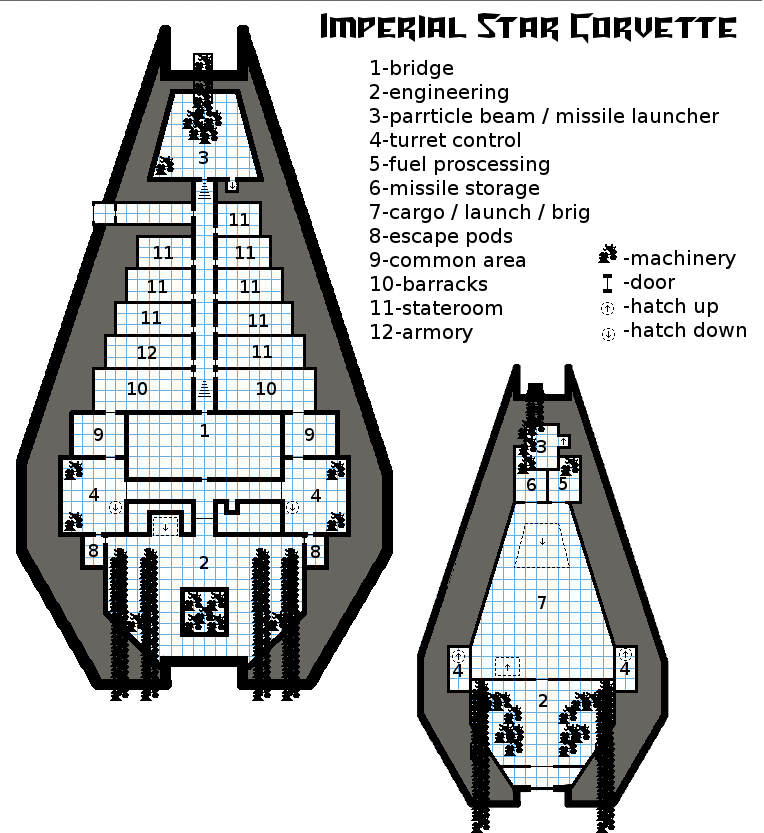 AREAS
AREAS
- bridge – Duty stations for the helm, sensors, communications, engineering, environmental controls, and a captain’s chair.
- engineering – This two-story section contains the power plant, maneuver drives, the jump drive, life support, duty stations for controls of all of the above, and a large lift that descends to the cargo hold. Multiple stairs and ladders allow movement between the decks. A cargo airlock opens to the aft from the bottom floor.
- main guns – The fixed particle beam occupies the top deck and the missile launcher the bottom deck of this two-story area, with duty stations for both weapons. A ladder allows passage between the decks.
- turrets – The lasers, sandcasters, and sand barrel storage fill the aft of the top floor of these areas. Fire control stations for the dorsal port and starboard turrets share this space on the top deck, while duty stations for the ventral port and starboard turrets are accessed by descending ladders to the lower-deck areas.
- fuel processing – The fuel scoop opens to space below this area, and raw hydrogen is refined by the machinery here and stored in the main tanks.
- missile storage – The ship’s compliment of 24 standard missiles and an auto-loader are here. A cargo door to the aft gives access to the cargo bay, and a standard door on starboard to the main gun’s lower deck.
- cargo bay – In addition to whatever cargo may be carried in the modest 27 tons of space available here, the ship’s 20 ton launch is stowed here, along with the eight emergency berths that serve as the ship’s brig (the Emperor’s justice is cold). A large cargo door and ramp opens towards the fore of the cargo bay for loading, unloading, and launching the ship’s raft. Cargo doors open to missile storage, fuel processing, and engineering. A cargo lift gives access to engineering’s top deck.
- escape pods – Accessible from engineering, the ship’s seven escape pods await occupants here, and in the case of use launch through the top of the ship behind the turrets.
- common areas – The mess for the crew, tables, chairs and a large holographic display occupy the port common area, while tables, couches, and small video screens make up the lounge on the starboard side.
- barracks – Accommodations for ten star marines in the form of individual bunks fill these two barracks.
- staterooms – Double-occupancy staterooms make up the quarters for the ship’s three shifts of gunners, engineers, and helms-beings, with two shifts hot-bunking in each bed. The captain enjoys one of the large staterooms near the bridge for their personal use, while the first and second mates share the other large stateroom across the hall from the captain. All staterooms have doors that open to the central hallway that connects the bridge to the main guns.
Posted in rules agnostic, Starship, Traveller and tagged deck plan, Starship by Adam A. Thompson with no comments yet.
Confederation of Planets Frigate
Confederation Frigate – 700 tons – 313,180,000 Cr.
These medium ConFed ships are designed to be versatile, since their missions often include diplomacy, scouting, or transporting cargo and personnel across space in addition to serving as light warships.
Large fuel reserves and cargo capacity mean that these frigates can transport 200 tons of cargo 3 parsecs before needing to be refueled – an operation that requires assistance, as the distributed hull is not equipped with fuel scoops or processors.
When staffed with a full crew these frigates offer luxurious accommodations. The advanced voice-interface computer systems ensure that even at reduced staff levels the command crew is able to navigate and, if necessary, defend themselves. Eight beam lasers and two missile launchers allow these Frigates to deal respectable damage to enemy vessels at long range, and four sandcasters and three pulse lasers equip them for anti-laser and point defense.
System – Details – Tons – Cost (MCr)
Hull – 14 points distributed hull – 700 tons – 57.6 MCr.
Structure – 14 points
Armour – 6 points bonded superdense – 35 tons – 28.2 MCr.
Power Plant – class G – 22 tons – 56 MCr.
Maneuver Drive – thrust 2 – class G – 13 tons – 28 MCr.
Jump Drive – jump 2 – class G – 40 tons – 70 MCr.
Bridge – 20 tonnes – 3.5 MCr.
Crew – 1 captain, 2 officers, 3 pilots, 3 navigators, 6 engineers, 14 gunners, 8 marines
Computer – model 4 – rating 20 – 5 MCr.
Software – intellect 1, maneuver 0, jump control 2, fire control 4, evade 1, auto-repair 1, library – 17.2 MCr.
Electronics – advanced: radar, lidar, densiometer, jammers – 3 tons – 2 MCr.
Weapons
4 x triple turret – beam laser / beam laser / sandcaster – 4 tons – 13 MCr.
40 x sandcaster barrels – 2 tons – 0.02 MCr.
2 x double turret – missile rack / missile rack – 2 tons – 2.5 MCr.
24 x smart missiles – 2 tons – 0.06 MCr.
1 x triple turret – pulse laser / pulse laser / pulse laser – 1 ton – 2.5 MCr.
Fuel – 1 x jump 2 and 13 weeks of operation – 224 tons
Cargo Capacity – 200 tons
State Rooms – 4 single, 13 double – 68 tons – 8.5 MCr.
Barracks – 8 bunks – 16 tons – 0.8 MCr.
Low Berths – 4 berths – 2 tons – 0.2 MCr.
Luxuries – 10 tons – 1 MCr.
Extras
Ships Locker
Probe Drones – 5 drones – 1 ton – 0.5 MCr.
Repair Drones – 7 tons – 1.4 MCr.
Escape Pods – 16 pods – 8 tons – 0.8 MCr.
Launch – 20 tons – 14 MCr.
Maintenance Cost (monthly) – 25,940 Cr.
Life Support Cost (monthly) – 57,400 Cr.
Posted in Equipment, Traveller and tagged Science-Fiction, Starship by Adam A. Thompson with no comments yet.
Dungeons & Dragons 5th Edition – First Impressions
Welcome – I am proud to announce that this review of the 5th edition Dungeons & Dragons Player’s Handbook is the 750th post on Claw / Claw / Bite!
In addition this is the inaugural post on the new blog and website. The server hosting this blog went down a few months ago. Due to incomplete backups we have had to rebuild a several years of the blog one post at a time. This has only been possible due to the Internet Archive‘s captures of the original blog. Thank you, Internet Archive, you were my only hope. With the help of those captures the many years of our creative works are once again available to the public.
To introduce myself – I’ve been playing Dungeons & Dragons since 1982 or so, and I’ve been publishing material for role-playing games through Unicorn Rampant since 2006. You can see the fruits of our labors here. Feel free to leave comments here on the blog, and expect this new site to continue to evolve and change as we clean up from the move and reconstruction.
Now for the review.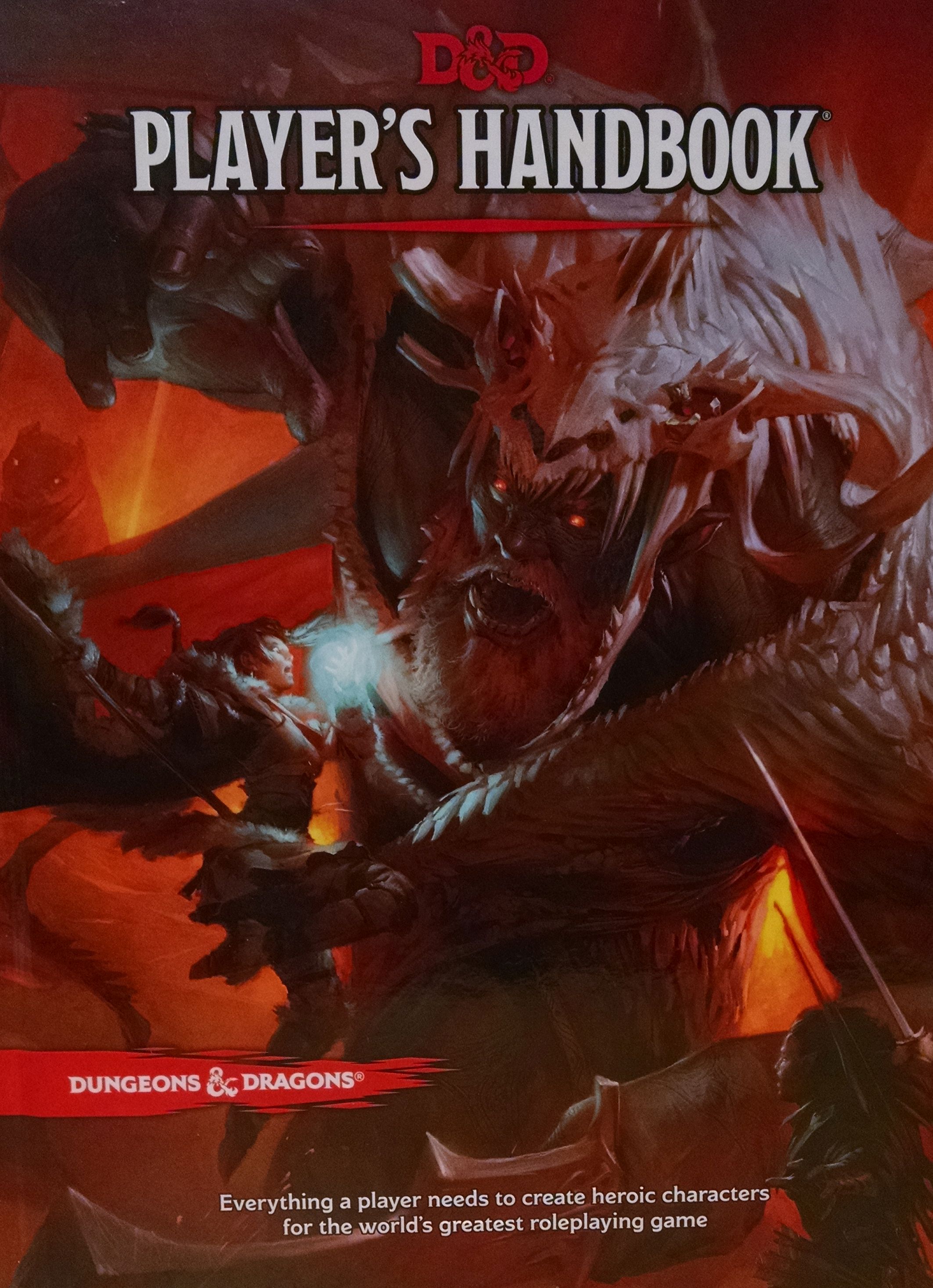
I’ve been reading the 5th Edition Dungeons & Dragons Player’s Handbook from cover to cover in preparation for playing and writing material for the new rules. As someone who has already played more than 5 different versions of this game, along with many other role-playing games, I’m very interested in how well this new edition of gaming books are written, and how fun the game looks to play.
My summary? The new edition of the Player’s Handbook is well done, both for new players and those of use who have been loving this hobby for a long time. A few of the best ideas from 4th edition have been baked into a streamlined, inspiring, familiar-feeling new edition of Dungeons & Dragons. Clear, evocative writing illuminates character options and rules throughout, with a healthy dose of illustrative art, and fun tables and charts.
Reviewing the table of contents, I’m glad to report that they have more or less kept the same order of chapters that has been in use since the AD&D Player’s Handbook. The 5e D&D PHB has that same sensible old order of topics that make it a quick and easy-to-use resource for a veteran player like me: Characters, Equipment, Rules, Spells, and Appendices. There is also an extensive index.
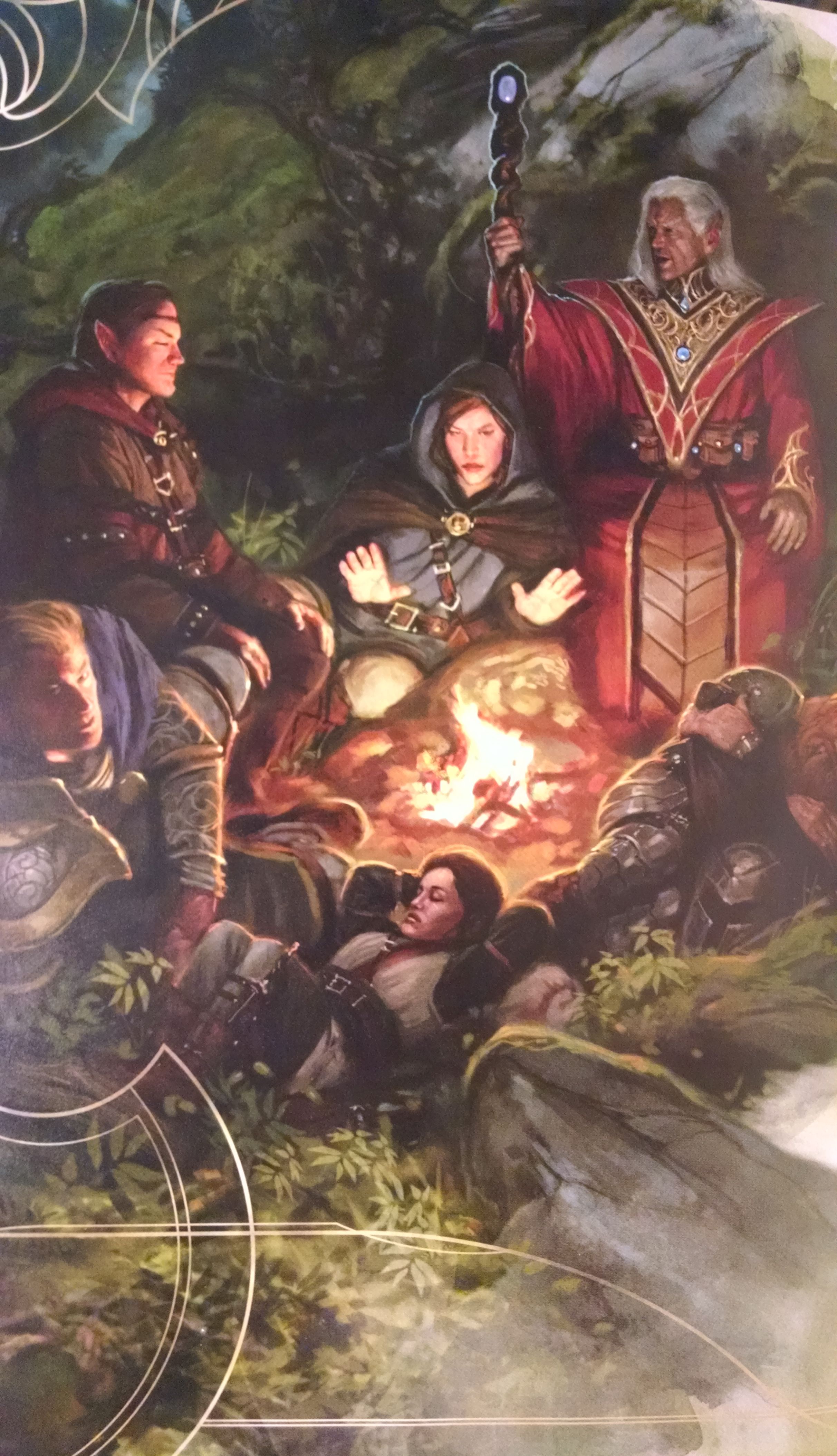 The Player’s Handbook is graced throughout with a generous amount of varied art. Realistic-looking pieces gaze across the page at more illustrative ones, and everything is vividly colorful and well executed.
The introduction lends good context to what this strange game is, with evocative cues for the imagination throughout. For new players this section of a role-playing game rule book is hugely important – not just to summarize how the game is played but to give the reader an idea as to why it is played. If a prospective player reads the fist page and it doesn’t make sense, or if it just falls flat, then that reader might miss out on this incredible game.
The worlds of Dungeons & Dragons are presented as individual creations with similarities, and the official settings of Greyhawk, The Forgotten Realms, and Dragonlance are used for examples throughout. Thus the reader is presented with a rich variety of inspirational details while being encouraged to create their own unique game.
The character creation section does a good job of walking the player step-by-step through the process of filling out the character sheet. The basics of what makes up a character and relevant rules are explained as needed along the way. I applaud the tutorial-style approach to the overview.
The races presented are divided into common and uncommon races, the former being the humans, halflings, elves and dwarves we’re familiar with from Tolkien’s Middle Earth. Personally, I find it jives nicely with my mental image of a fantasy world, wherein the included dragonborn, gnomes, half-elves, half-orcs and tieflings are presented as being less prevalent. Of course an individual Dungeon Master could write whatever mix of races they wanted into their own campaign, changing things to suit their group’s tastes, but that goes for everything in these books. There are a wealth of explanatory sidebars filled with in-game role-playing details about how the various races relate to each other in this typical fantasy world. In an example of how this edition has streamlined the rules Darkvision has been simplified – they combined what previous editions have called low-light vision and darkvision and gave it to everyone except humans, halflings, and dragonborn.
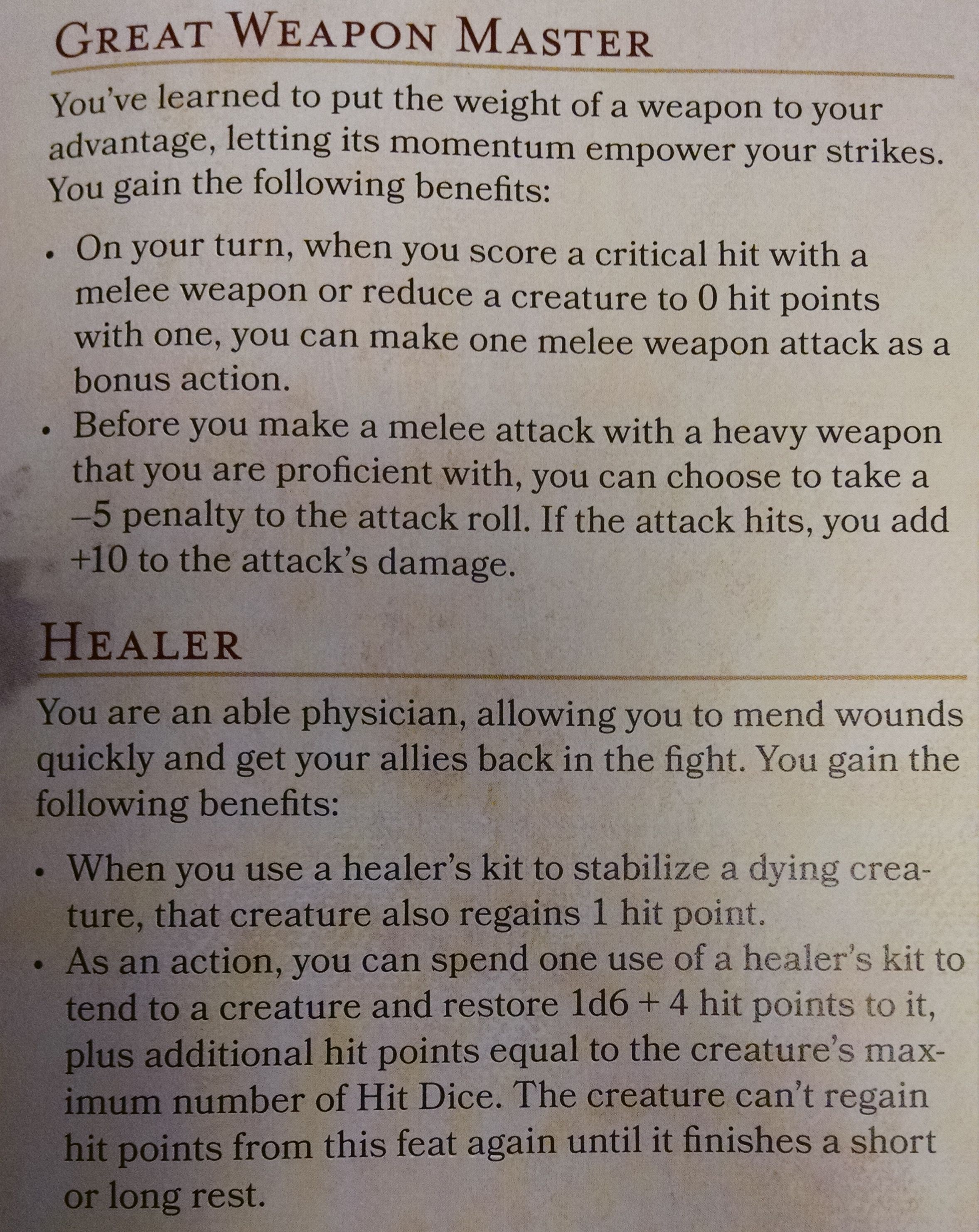 The classes received a similar treatment – there are lots of well-written inspirational passages that give a variety of ideas about what each different class can be. Class abilities have been both expanded and streamlined. For example there are now five different fighting styles, and rangers, fighters, and paladins get to chose from different subsets of the five. For the magically inclined classes spellcasting has also been simplified and made more flexible while retaining the core feel for each class. Also, some of the most popular prestige classes have been written into the core classes as options that can be chosen as the character progresses to higher levels. The cherry on top is the inclusion of the warlock class as one of the core classes. Recognizable feats have been combined and made more fun – the cleave and power attack feat takes effect on rolls of natural 20, for example. Other rules have similar dramatic effects when a 1 or a 20 is rolled.
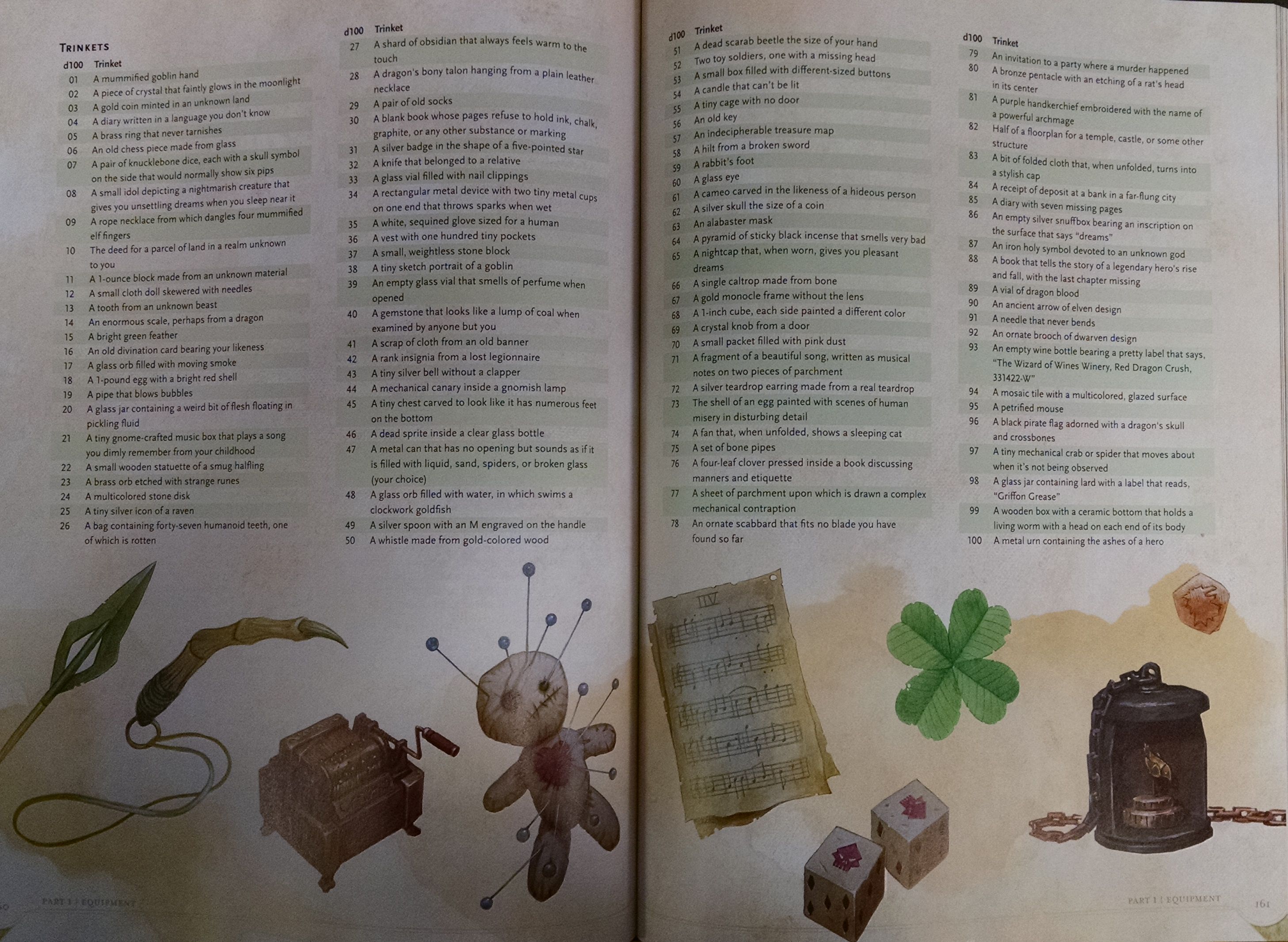 Throughout the book there are great tables and charts. Finding the trinkets chart, for example, just thrilled me. What a great resource to inspire players and DMs! And there are nods there, as well as through the rest of the book, to great classic D&D adventures and supplements I’ve played with such as The Temple of Elemental Evil. When looking for inspiration, trying to create your first dungeon, or just rolling random encounters and treasure, a evocative table to roll or pick from is a great tool. I’m glad they included lots of them.
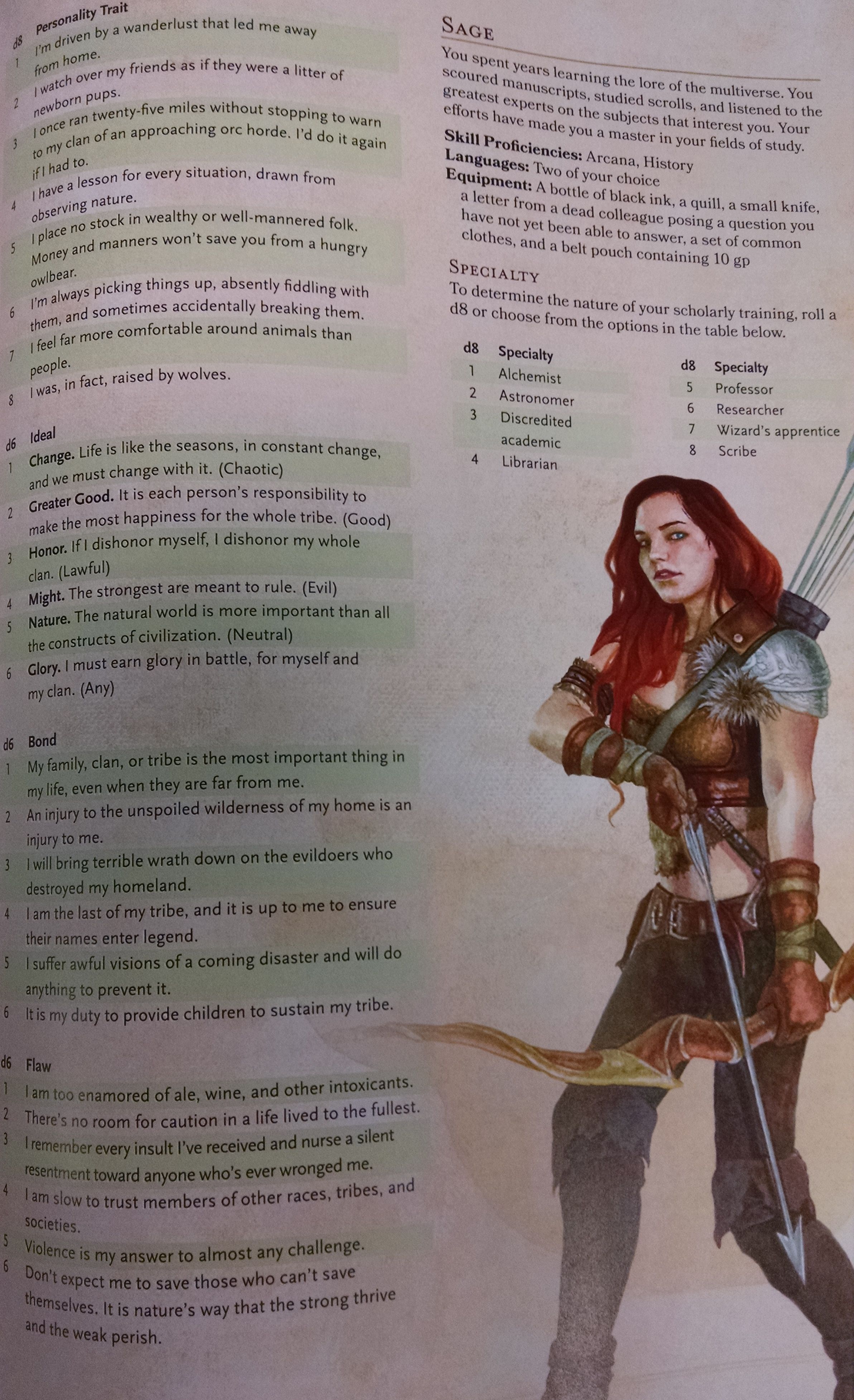 The excellent writing continues in the character details chapter, which covers description, values, bonds, flaws, alignment, backgrounds, feats, and inspiration. The backgrounds feature is a great innovation – players pick one of the many backgrounds, such as folk hero, noble, or acolyte, and that background confers skill and tool proficiency along with other character features. Each background has plenty of example prompts to inspire some creative storytelling for your character. It’s a huge improvement, in terms of player experience, over the skill point system which was always one of the most tedious parts of character creation in my opinion. Now players can just pick one background that confers a group of related skills and be done with it. Since your choice is not tied to your class players get to have a bit more variety in their characters. For those who prefer to craft something individual and different there are rules for that as well.
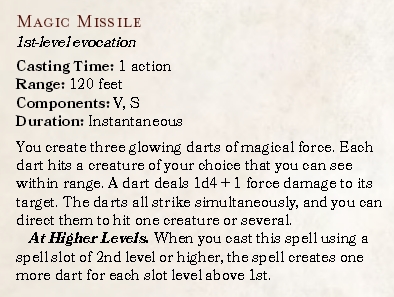 The magic section includes all the expected spells, and some new ones from 4th edition. The spells are simple and clear, most a few short paragraphs long, and the mechanics for increasing the power of lower-level spells are great. Using a higher level spell slot boosts the power of most spells in a nice, linear way. Spellcasting classes have 0th level cantrips they can cast an unlimited number of times, but because the hit point and damage totals are lower than they were in 4th edition, players shouldn’t have to actually cast them an unlimited number of times any more (sorry, 4th edition. That’ll be the only joke I make about you). Even spells that have been tricky or confusing to some in previous editions , such as Dispel Magic, have been streamlined and given more flexibility. Spells are one of the most important aspects of Dungeons & Dragons and the authors have done a great job with them.
 In an admirable move, Wizards of the Coast has released the basic rules for free as a PDF. It includes rules for playing a human, dwarf, elf or halfling and cleric, fighter, rogue and wizard, and about as many spells as were in the AD&D PHB. http://dnd.wizards.com/articles/features/basicrules?x=dnd/basicrules
In conclusion I will say that I’m really looking forward to giving this new set of rules a spin. The writers at Wizards of the Coast have produced a new edition of the game that looks to have gotten the rules out of the way so that we can focus on the exciting stories we’re trying to tell. Keep watching this spot on Claw / Claw / Bite for more impressions as we play.
Posted in 5th edition Dungeons & Dragons, Editorial, Review and tagged Fantasy by Adam A. Thompson with 2 comments.
Imperial Star Corvette
Imperial Star Corvette – 500 tons – 324,385,000 Cr
Reasonably fast, well armed, and heavily armored, the Imperial Star Corvette is the workhorse of the Skein Reach, and dreaded by captains of smaller ships. Typically used to patrol the borders of Imperial space, its fast jump drive ensures that the Emperor’s forces can quickly crush most small threats and effectively pursue criminals and smugglers along the periphery. Other than their cruiser, a handful of these aging Corvettes make up the majority of the Duke’s interstellar fleet.
With a maximum thrust of 5 gravities these corvettes can overtake most ships, and those that can outrun them must still escape the reach of their missiles and the main gun – a fixed particle beam. Captains that stand and fight will have to slug through the medium crystaliron armor while suffering a fusillade of return fire from the eight lasers.
In addition to the captain and crew of 24, the Star Corvette carries a compliment of 20 Imperial space troopers, a ship’s launch for landing them on planet or boarding other ships, and a cryo-brig for 8 prisoners. Some corvettes will be outfitted with two light fighters instead of the launch, further extending the Corvette’s reach.
In order to facilitate rapid patrols or to make emergency jumps, the Imperial Star Corvette carries enough fuel for four one-parsec jumps.
System – Details – Tonnage – Cost (MCr)
Hull – 10 points, standard wedge – 500 tons – 32 MCr.
Structure – 10 points
Armour – 4 points, crystaliron – 25 tons – 6.4 MCr.
Power Plant – class N – 40 tons, 104 MCr.
Maneuver Drive – thrust 5 – class N – 25 tons – 52 MCr.
Jump Drive – jump 3 – class H – 45 tons – 80 MCr.
Bridge – 20 tons – 2.5 MCr.
Crew – 1 captain, 1 first mate, 3 pilots, 1 navigator, 2 engineers, 5 gunners, 20 marines
Computer – model 3 – rating 15 – 2 MCr.
Software – maneuver 0, jump control 3, fire control 3, library – 6.3 MCr.
Electronics – basic military: radar, lidar, jammers – 2 tons – 1 MCr.
Weapons
4 x triple turret – beam laser / pulse laser / sandcaster – 4 tons – 13.75 MCr.
60 x sandcaster barrels – 3 tons – 0.03 MCr.
1 x double fixed hardpoint – particle beam / missile rack – 0 tons – 5 MCr.
24 x basic missile – 2 tons – 0.03 MCr.
Fuel – 4 x jump 1 and 12 days of operation – 214 tons
Cargo Capacity – 16 tons
State Rooms – 1 single, 6 double – 28 tons – 3.5 MCr.
Barracks – 20 bunks – 40 tons – 2 MCr.
Emergency Low Berths / Brig – 8 berths – 2 tons – 0.2 MCr.
Extras
Fuel Scoops – 1 MCr.
Fuel Processors – 150 tons per day – 7.5 tons – 0.075 MCr.
Ships Locker
Probe Drones – 5 drones – 1 ton – 0.5 MCr.
Repair Drones – 5 tons – 1 MCr.
Escape Pods – 3.5 tons – 7 pods – 0.7 MCr.
Launch – 20 tons – 14 MCr.
Maintenance Cost (monthly) – 27,032 Cr.
Life Support Cost (monthly) – 50,000 Cr.
Posted in Starship, Traveller and tagged Science-Fiction, Starship by Adam A. Thompson with 2 comments.
Demon Lord of Murder
This insane lesser demon lord is the dual embodiment of the primitive urges or murder and self-defense. Extremely obscure, he is venerated only by the mad. He is usually depicted as a hunched, primitive, shadowy man wielding a thigh bone.
Posted in Deity by Adam A. Thompson with no comments yet.
Alidaal’s Barrel of Commerce
This oaken wooden barrel is bound with silver hoops and has a well-fitted lid. It was created and left behind long ago to by the arch-wizard Alidaal. Is enchanted such that it exists in two places at once, is intelligent, can talk, and anything put in to the barrel goes to an extra dimensional space that the barrel alone has access to. Alidaal originally used it to facilitate trade with a trading group in the outer worlds, and the “second barrel” is still in the the trading area. The barrel has become cranky over the decades of its abandonment but will act as in intermediary with the otherworldly merchants if the PCs are indulgent of the barrel’s desire for conversation.
Posted in Magic Item by Adam A. Thompson with no comments yet.
Variant Rule: Brace Action
Bracing is when a character readies whatever defenses available for an imminent attack. This could involve raising and ducking behind a shield, preparing to dodge a blow, or holding your weapon in a guard position.
Bracing is a standard action which gives the character who braces a +1 dodge bonus to their AC and Reflex save until the start of their next turn.
Use of this optional rule may give combat a more granular feel, and peels back a bit of the abstraction that is assumed in the combat rules around AC and Reflex saving throws. As such it may slow combat down slightly, while giving a new tactical option to characters and monsters.
If you end up giving this new rule a try in your game please let us know what you think.
Posted in 3rd edition Dungeons & Dragons / d20 fantasy / Pathfinder, Variant Rules by Adam A. Thompson with no comments yet.
One Page Dungeon Contest 2014
The April 30th deadline for the One Page Dungeon Contest 2014 is rapidly approaching! This fantastic “competition” is a great excuse to dust off an old adventure you’re run and distill it to its essence. You can find out lots more about what one pagers are all about, including the submission rules and guidelines on their site in case you want to share your one-page creations with the (role playing) world.
The site is also a fine repository of fantastic ideas for adventures if you’re running one in the near future. Nothing quite like being prepared for a game you’re running…
I have put together a one-page version of an adventure we ran at a few Houston gaming conventions in 2013, The Tomb of Athganazar and just submitted it. Regardless of how it fares, the joy is in the making!
Posted in Adventure, announcement and tagged contest by Stephen Hilderbrand with no comments yet.
Magic Item – Delver’s Rope
Description
This small coil of fine silk rope is light and wonderfully easy to handle. When users speak a magic word and uncoil it, however, they will discover that it it long enough for any use, no matter how much rope is needed. For example, the small coil can be lowered all the way down to the bottom of a 300 foot deep chasm, or used to tie a tightrope across a eighty foot gap between two rooftops, or bind a single prisoner, and the rope is exactly long enough to accomplish the task.
Construction and Cost
Craft Wondrous Item, rope trick; Cost 4,000 gp.
Posted in 3rd edition Dungeons & Dragons / d20 fantasy / Pathfinder, Magic Item by Adam A. Thompson with no comments yet.
Finkald’s Freebooters
medium level fantasy encounter
While travelling on the road, the Player Characters (PCs) encounter “Finkald’s (‘Fin-kald) Freebooters”, a small army composed of rowdy dwarven mercenary veterans. They are fresh from a string of victories in the lands to the west, and are on a quest to find the fabulous lost dwarven stronghold of Kargoth. Finkald claims to have a map that shows the way to Kargoth, also known as “The Invisible Fortress”, but will show it to none, saying he has committed it to memory. His secret, which he will never admit, is that he recently learned that his victories in the east had led to his being singled out for assassination by the wild priest-hunters of the elven lands they had been raiding. He is therefore leading his warband as far away as he can get from those woods.
Upon meeting the party, Finkald will size them up, silently appraising their wealth, asking which way the roads lead, if they know anything of Kargoth, and who the players are and where they are headed. While Finkald talks the dwarves will fall out of order to begin drinking from a keg on a wagon and eating from a haunch of roast deer. Some will gather to hear the conversation.
Unless the players flee or offer to join Finkald on his journey to Kargoth he will ask them if they can help the army with any spare provisions they may have – “You see how hungry my Freebooters are – full bellies keep them happy!”. If the players seem wealthy and relatively weak, he might ask for gold or, particularly, any gems or jewelry they players are wearing. If the players refuse to give him what he asks for, he raises his voice and makes threats, “What’s to stop us from taking it, and everything else you have!?” Unless the players pay his price or run away, they try to take the players’ valuables by force.
ENCOUNTER – low to medium level
- Fainkald – dwarven ranger 6
- Seargents – 3 x dwarven fighter 4
- Freebooters – 20 x dwarven fighter 1
Posted in Encounter, rules agnostic and tagged Fantasy by Adam A. Thompson with no comments yet.